8 Restaurants Mission Statements to Inspire Your Own
Published on
By Tony Newcome — Founder of AnchOps · Owner, Pizza Harbour
This article was drafted with AI assistance and reviewed by Tony Newcome, a working restaurant operator.
A restaurant mission statement earns its place when it works as a decision filter — guiding what you train, where labor goes during a rush, which supplier compromises are acceptable, and what service behavior guests notice. The eight examples below are organized by concept, from farm-to-table to social impact, each connected to staffing, training, and labor control, with reusable templates.
The strongest restaurants mission statements work differently. They act as filters for decisions. They help managers decide which skills to train, where labor belongs during a busy shift, which supplier compromises the concept can accept, and what service behavior guests should notice. That makes the mission part of your brand narrative development, but it also makes it a management constraint.
The eight examples below are organized by operating concept, from local sourcing and inclusive dining to culinary innovation, cultural preservation, hospitality, and social impact. Each breakdown connects the promise to staffing, training, service consistency, and labor control. You'll also find reusable language patterns, practical tests, and a writing framework for turning values into observable behavior instead of decorative copy.
Table of Contents
- 1. Farm-to-Table Quality and Local Sourcing Mission
- Convert seasonality into a labor plan
- 2. Inclusive Community and Accessible Fine Dining Mission
- Protect the promise without losing labor control
- 3. Chef-Driven Innovation and Culinary Excellence Mission
- Treat menu changes as labor events
- 4. Health, Wellness, and Transparent Nutrition Mission
- Put documentation on the schedule
- 5. Cultural Preservation and Authentic Ethnic Cuisine Mission
- Pay for knowledge transfer
- 6. Sustainability and Waste Reduction Mission
- Make invisible work visible
- 7. Service Excellence and Hospitality Focus Mission
- Invest without surrendering the labor target
- 8. Community Support and Social Impact Mission
- Separate program labor from service labor
- 8-Point Restaurant Mission Comparison
- Turn the Values on the Page Into a Working System
- Edit the promise before you publish it
1. Farm-to-Table Quality and Local Sourcing Mission
A farm-to-table mission sounds simple: build direct relationships with nearby growers and suppliers, then serve fresh, seasonal ingredients with care. The operational reality is less tidy. A menu built around what farmers can provide changes prep volume, knife work, storage, substitutions, and the skills required on each station.
Consider the operating logic behind concepts such as The Farmstead in Sonoma County, Gramercy Tavern, and Canlis in Seattle. The point isn't to copy their positioning. It's to understand that local sourcing becomes credible when employees can explain where ingredients came from and execute the menu despite seasonal variation.
A useful draft might read: “We work directly with regional growers to serve seasonal food at its freshest, while strengthening the farms and communities that make our menu possible.” That statement creates decisions. Purchasing needs supplier relationships, chefs need a substitution process, and servers need enough product knowledge to describe the day's changes without improvising misinformation.
Convert seasonality into a labor plan
Seasonal ingredients can change prep complexity. Root vegetables may demand more peeling and trimming than spring greens, while a supplier change can require new recipes or techniques. Use AnchOps scheduling to assign dedicated prep coverage during high-volume seasons, then schedule cross-training when ingredients or suppliers change.
Track prep and service labor separately where possible. If mission-driven prep work is hidden inside general labor, managers can't see whether the concept's promise is creating avoidable strain. Review labor targets alongside sales history through a Toast POS integration, and monitor tip distributions so prep-focused employees aren't overlooked because guests see less of their work.
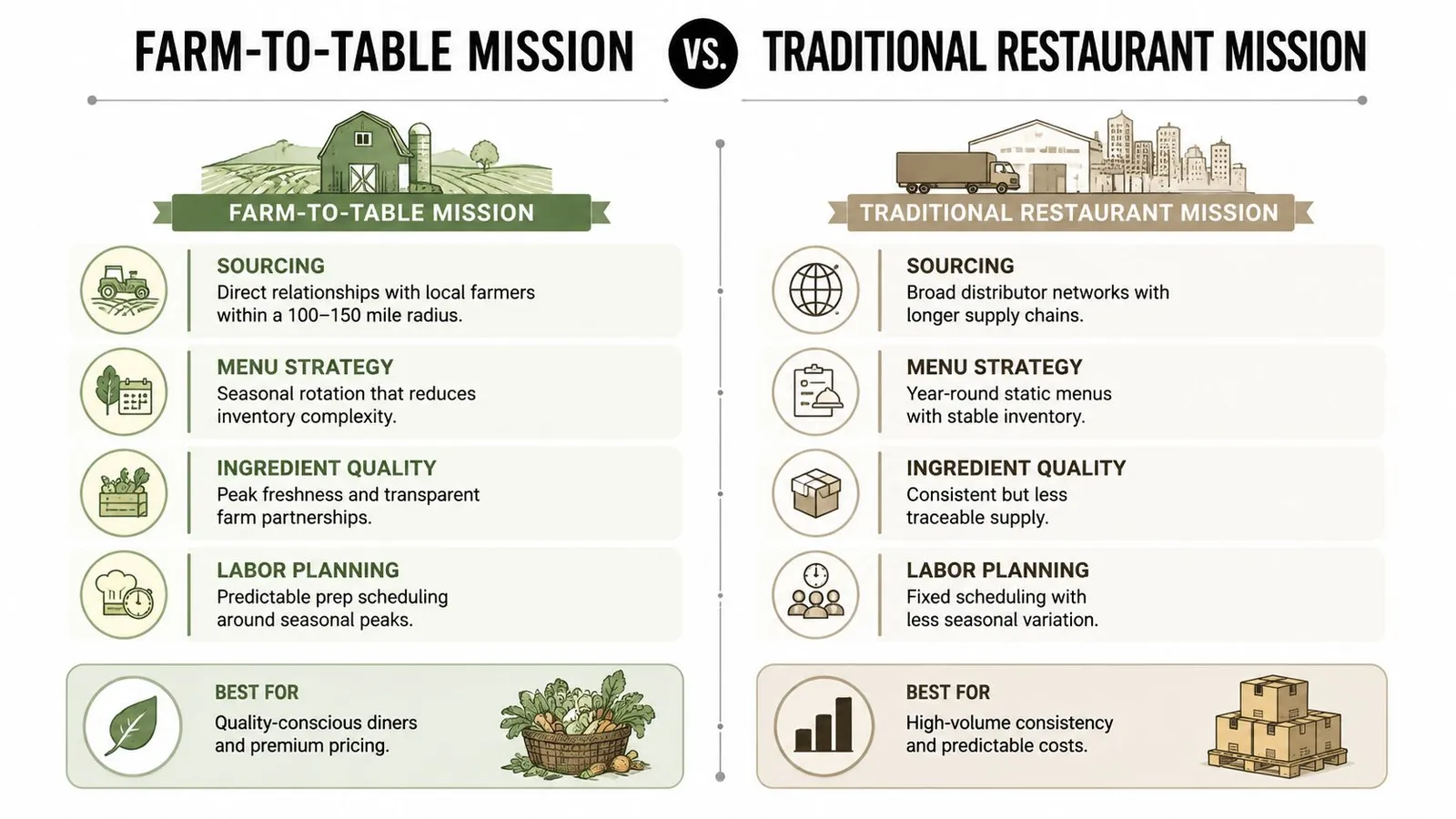
Practical rule: If “local” appears in the mission, write the supplier, prep, training, and substitution behaviors that prove it.
2. Inclusive Community and Accessible Fine Dining Mission
An inclusive fine-dining mission promises more than an attractive dining room. It may commit the restaurant to welcoming guests across differences in income, ability, identity, and background. That promise affects hiring, accommodations, service language, pricing decisions, and how managers respond when a guest or employee needs support.
Republique in Los Angeles, Dirt Candy in New York City, and Boka Group in Chicago represent different ways an operator might express this concept. A practical mission could say: “We make thoughtful dining welcoming and accessible, with fair opportunities for our team and a service culture that meets guests where they are.” The wording matters less than whether managers can translate it into action.
Accessibility can require extra coordination. Staff may need training on dietary requests, mobility accommodations, respectful communication, and consistent treatment during busy periods. If the restaurant promises fair employment, managers also need transparent scheduling, clear wage communication, and advancement conversations that don't depend on informal access to leadership.
Protect the promise without losing labor control
Track labor cost per cover by shift rather than treating accessibility as an unlimited staffing request. A slower service may justify mentorship or training coverage, while a peak shift may require tighter role clarity and better deployment. AnchOps can help managers see projected labor before publishing schedules and receive mid-shift visibility when labor begins drifting from target.
Use tip-pool calculations to support transparent distribution across eligible team members. Batch timecard approval can reduce administrative work, leaving managers more time for coaching and inclusion initiatives. Push notifications for shift releases and coverage requests also give employees a clearer communication channel than scattered group messages.
A mission becomes believable when a guest receives an accommodation without being treated as an inconvenience, and when an employee sees the same respect in scheduling and pay practices.
3. Chef-Driven Innovation and Culinary Excellence Mission
Chef-driven restaurants sell creative judgment, but creativity creates operating volatility. A new dish can alter station balance, prep sequencing, ticket communication, plating time, and the level of expertise required on the line. Noma in Copenhagen, The French Laundry in Napa Valley, and Alinea in Chicago show how a culinary mission can become inseparable from specialized labor and disciplined training.
A statement such as “We challenge traditional technique through precise, seasonal cooking that gives every guest a distinctive expression of our chef's point of view” makes a clear promise. It also creates a standard. The chef's vision can't depend on one person rescuing service every night. The team needs documented recipes, tasting protocols, station ownership, and training before a menu reaches guests.
Treat menu changes as labor events
Build training shifts into the menu calendar. AnchOps scheduling templates can reserve labor for practice before a transition, rather than forcing employees to learn a dish during a live service. Track kitchen and front-of-house labor independently so managers can identify whether a dish is consuming time in prep, cooking, plating, explanation, or recovery.
New dishes often require more kitchen time initially as employees learn execution, but no precise uplift should be assumed without your own data. Use sales history and station-level labor records to establish a local baseline. Mid-shift alerts can flag labor drift while the team is still adapting, giving managers a chance to simplify a garnish, move a trained cook, or pause a low-demand preparation.
A creative mission should fund the practice required to deliver it. Otherwise, the restaurant asks employees to absorb the cost through rushed shifts.
Kitchen contributions also deserve recognition. If the concept's reputation depends on specialized culinary work, review tip-pool and tip-out structures so the compensation model doesn't send the message that only guest-facing labor creates value. Operators building teams for changing guest expectations can also learn from Gen Z restaurant workforce considerations.
The visual language of innovation should match the operating discipline behind it.
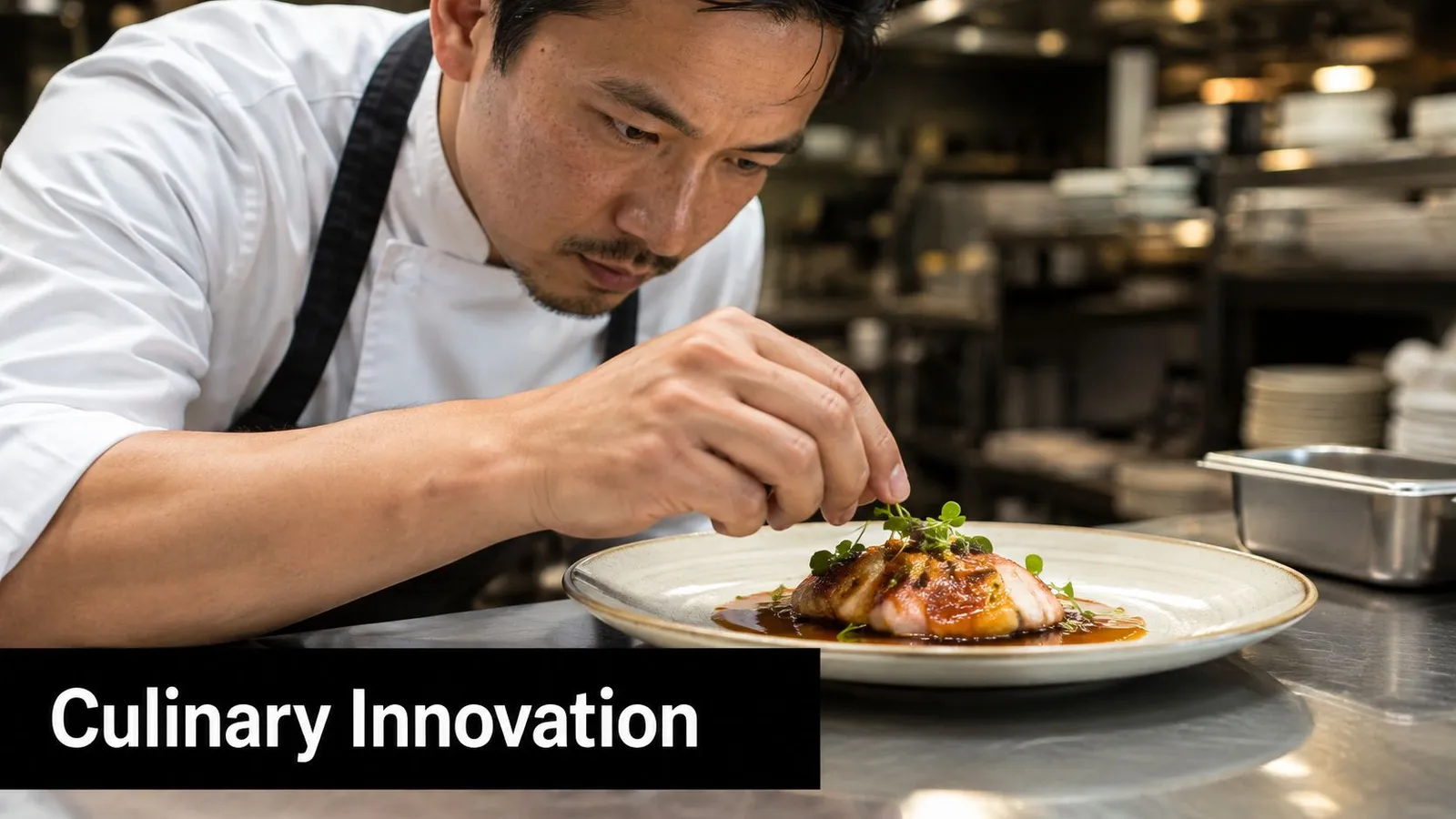
A short visual demonstration can reinforce the craft, but it shouldn't replace the recipe standards and training calendar that make the craft repeatable.
4. Health, Wellness, and Transparent Nutrition Mission
A wellness mission earns trust through detail. Guests need more than words such as “healthy” or “clean.” They need consistent ingredient information, reliable allergen communication, accurate menu descriptions, and employees who know when to answer and when to escalate a question.
True Food Kitchen, Sweetgreen, and Erewhon Market illustrate distinct versions of health-focused positioning. An operator might write: “We make nourishing food easier to understand by documenting our ingredients, preparing them carefully, and giving guests clear choices.” This is stronger than promising that every item is universally good for every person.
The mission creates administrative and kitchen work. Someone must maintain recipes, verify supplier information, update allergen records, train employees, and ensure the menu matches what the kitchen serves. A last-minute substitution can affect more than flavor. It can change an allergen profile or invalidate a nutrition claim.
Put documentation on the schedule
Use scheduling templates to assign responsibility for nutritional documentation and allergen verification. If managers treat this work as unpaid overhead, updates will happen late or inconsistently. Cross-train employees during slower shifts so knowledge doesn't sit with one chef or manager.
Track labor attached to health-focused menu items separately from standard offerings. That can include recipe testing, sourcing documentation, staff education, and guest communication. Managers can then decide whether a menu change needs a price adjustment, a simpler preparation, or additional coverage.
Food safety and certification requirements also need their own operating controls. Operators can use a dedicated guide to food certification and licensing while building training into onboarding and recurring refreshers.
AnchOps batch timecard approval can reduce routine administrative time, giving managers more room to update recipes and review allergen procedures. The mission should appear in the kitchen's documentation, the server's explanation, and the manager's response when an ingredient changes.
5. Cultural Preservation and Authentic Ethnic Cuisine Mission
Authenticity isn't a flavor adjective. It's a labor and knowledge commitment. A restaurant preserving regional recipes or techniques needs people who understand the cultural context, suppliers who can provide the right ingredients, and training systems that prevent shortcuts from replacing the original method.
Republica Peruana, Hecho en Dumbo, and Lilia offer useful examples of how a restaurant might center Peruvian, Mexican, or Italian regional traditions. A mission could read: “We preserve the cooking traditions of our community by teaching regional techniques, honoring family recipes, and serving them with care to today's guests.” That wording names an action, not just an identity.
Traditional preparation can take longer than a modern shortcut. A dough, broth, sauce, or pasta shape may require apprenticeship-style learning and careful repetition. If managers schedule only for immediate ticket volume, they'll cut the very practices the mission claims to protect.
Pay for knowledge transfer
Create dedicated training hours for employees learning specialized techniques. Track labor by technique or dish type to understand the cost of authenticity and set prices accordingly. The goal isn't to make culture pass a narrow efficiency test. It's to ensure the restaurant can compensate the people who carry and teach the knowledge.
Tip distribution settings can recognize mentorship and expertise transfer where the restaurant's compensation model permits it. In-app communication also helps managers maintain clear expectations across language and cultural differences. Written standards, demonstrations, translated materials, and respectful correction should work together.
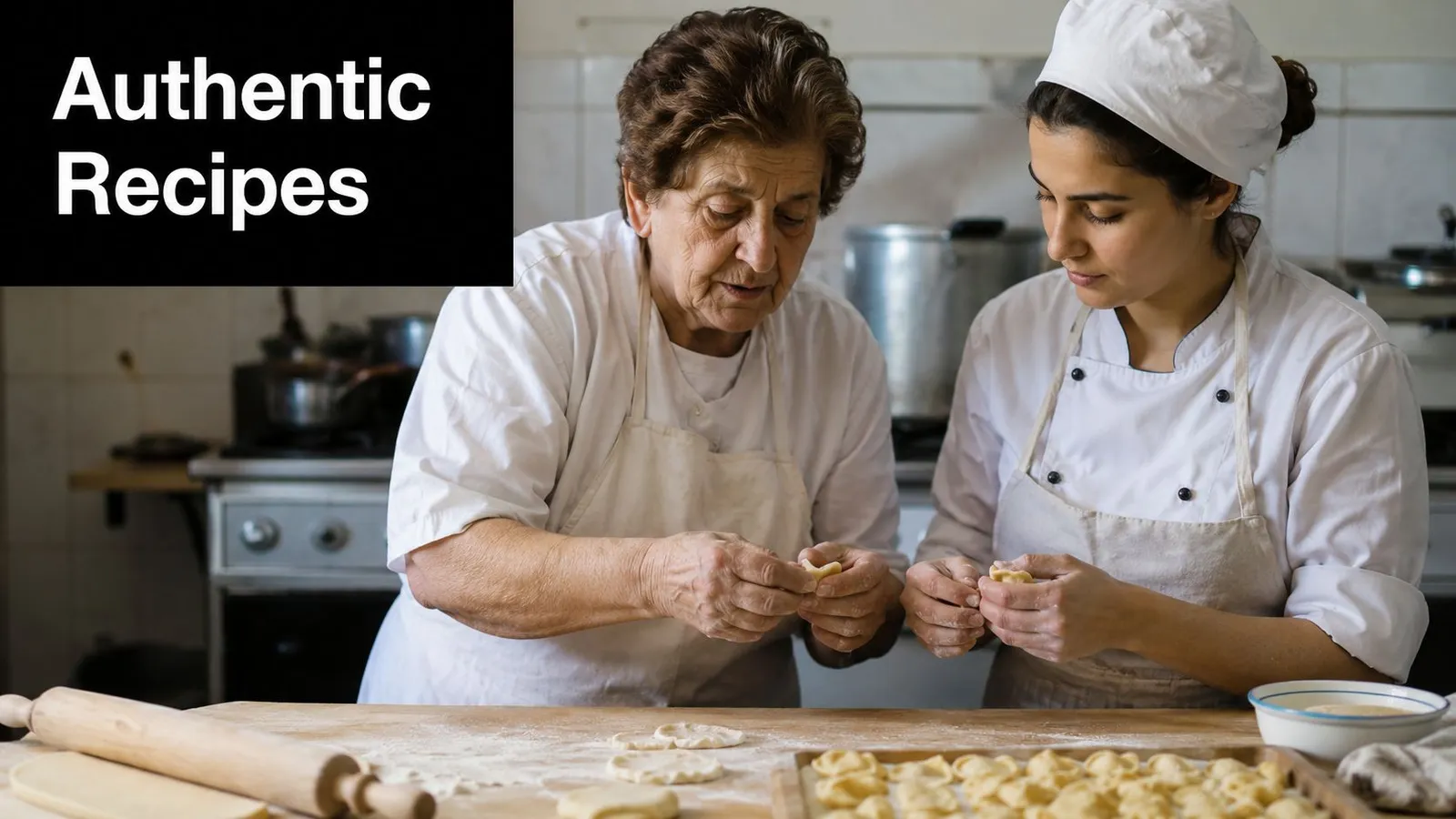
Management test: Ask whether the person teaching the tradition has paid time, authority, and a realistic path to see the technique continue.
A mission based on cultural preservation should also define what the restaurant won't dilute for convenience. That boundary helps chefs, buyers, and service staff make consistent decisions when demand rises.
6. Sustainability and Waste Reduction Mission
Sustainability becomes operational when employees know what happens to trim, packaging, spoiled inventory, and returned food. A statement promising environmental responsibility must account for the labor required to sort waste, manage composting, document purchasing, train new hires, and maintain the behaviors during a hectic close.
Concepts such as Nourish in Denver, Bacchanal Buffets, and Blackberry Farm in Tennessee show how sustainability can become part of the restaurant model rather than a campaign attached to it. A useful mission might say: “We reduce the environmental cost of every service through careful purchasing, full-use preparation, responsible waste handling, and continuous improvement.”
That promise changes prep. Cooks need to know which parts of an ingredient can be repurposed, servers need a consistent answer for guest questions, and closing teams need enough time to separate materials correctly. If the schedule doesn't include that work, employees will rush it or abandon it.
Make invisible work visible
Assign waste sorting, compost management, inventory checks, and sustainability documentation to named roles. AnchOps labor forecasting can help managers reserve time for those tasks instead of assuming they'll happen after clock-out. Track the labor cost of each initiative separately so leadership can judge the operational burden and decide where a process needs redesign.
During onboarding, train every employee on the behaviors that affect waste. Schedule refreshers when introducing composting, removing single-use plastics, changing portion controls, or adding new supplier standards. Batch timecard approvals can free manager time for program oversight and documentation.
Sustainability also needs a feedback loop. Review purchasing variances, prep yields, waste logs, and guest feedback alongside labor data. A mission that asks employees to work more carefully should give managers evidence about whether the process is reducing waste or just adding steps.
7. Service Excellence and Hospitality Focus Mission
A service mission is often the easiest to write and the hardest to enforce. “Exceptional hospitality” means little until the restaurant defines how employees greet guests, recover a mistake, pace a table, communicate delays, and hand off a special occasion.
The Ritz-Carlton, Union Square Hospitality Group, and Per Se represent hospitality-led models where the guest experience depends on training, judgment, and consistent standards. A sharper mission might say: “We make every guest feel recognized through informed, generous service that stays calm, personal, and precise from arrival through farewell.” Each adjective should become a behavior managers can coach.
Service excellence requires more than adding servers. It requires time for role-play, menu education, pre-shift communication, and manager observation. Reservation patterns and guest profiles can help determine where additional coverage has the greatest value, especially when a shift includes celebrations, VIP guests, or complex pacing needs.
Invest without surrendering the labor target
Use mid-shift labor alerts to spot drift before the shift closes. A manager might combine sections, move a trained support employee, or release coverage when demand falls, while still protecting the roles that preserve guest care. Schedule service training during slower periods and record that investment rather than pretending training is free.
Fair compensation matters, too. Tip pools and tip-outs should reflect the service model and the work that supports it. Transparent shift releases and coverage requests through in-app communication can reduce confusion and improve coordination. Managers looking for practical ways to reinforce the culture can use these staff appreciation activities for restaurants.
The strongest service mission can also guide review responses. A restaurant promising personal, attentive hospitality needs a consistent process for learning from complaints, not just a marketing response. Operators can connect that process with best review management for restaurants while keeping the internal focus on behavior and recovery.
8. Community Support and Social Impact Mission
A social-impact restaurant may hire people facing employment barriers, provide structured training, improve food access, or use its kitchen as a platform for education. Those goals can create meaningful value, but they also add management work. Employees may need more coaching, clearer documentation, predictable feedback, and support that extends beyond a normal station assignment.
Sweet Home Cafe at the Smithsonian, Edwins Leadership and Restaurant Program, and Common Good Kitchens illustrate different community-centered models. A mission might say: “We use food and hospitality to create pathways into work, strengthen local access to meals, and build a restaurant where community benefit is part of daily service.”
The statement should tell managers what to protect when service gets difficult. Training can't disappear every time sales soften, and support work can't remain an informal favor performed by one supervisor. Build structured pathways into the schedule, with defined milestones for skills, station readiness, and advancement.
Separate program labor from service labor
Track the labor used for training, mentoring, documentation, and employee support. That separation helps operators explain the investment to owners and partners, and it prevents program work from being mistaken for poor scheduling. AnchOps templates can organize training shifts, while batch timecard approval can reduce administrative workload and return manager time to coaching.
Use accessible in-app communication so employees receive clear information about schedules, expectations, and coverage. Schedule regular feedback conversations by reviewing attendance, shift patterns, and performance observations together. The goal is support with accountability, not vague encouragement.
Partnerships also need defined outcomes. Operators can apply a framework for measuring partnership KPIs when working with nonprofits, suppliers, schools, or workforce organizations. A mission earns credibility when the restaurant can explain what it does, who benefits, and how managers know the program is functioning.
8-Point Restaurant Mission Comparison
| Mission | Implementation Complexity 🔄 | Resource & Training ⚡ | Expected Outcomes 📊⭐ | Ideal Use Cases 💡 | Key Advantages ⭐ |
|---|---|---|---|---|---|
| Farm-to-Table Quality and Local Sourcing Mission | High 🔄, seasonal coordination, supplier relations | Medium‑High ⚡, sourcing logistics, prep skills | ⭐⭐⭐⭐, premium pricing, fresher menu, predictable seasonal demand | Neighborhood restaurants, farm-centric fine dining | Freshness, supplier transparency, reduced waste |
| Inclusive Community and Accessible Fine Dining Mission | High 🔄, HR, compliance, accessibility accommodations | High ⚡, living wages, extensive training, accommodations | ⭐⭐⭐⭐, stronger loyalty, broader talent pool, brand trust | Urban casual & fine dining prioritizing equity | Pay equity, diverse hiring, reputation benefits |
| Chef-Driven Innovation and Culinary Excellence Mission | High 🔄, frequent menu changes, R&D workflows | High ⚡, specialized culinary staff, ongoing training | ⭐⭐⭐⭐⭐, media attention, destination dining, high margins | Destination restaurants, tasting-menu venues | Differentiation, attracts top talent, premium pricing |
| Health, Wellness, and Transparent Nutrition Mission | Medium‑High 🔄, documentation, allergen protocols | Medium ⚡, nutrition expertise, admin for labeling | ⭐⭐⭐⭐, appeals to health demographics, reduced liability | Fast‑casual wellness brands, health‑forward concepts | Nutritional transparency, partnerships with wellness pros |
| Cultural Preservation and Authentic Ethnic Cuisine Mission | High 🔄, apprenticeship-style training, technique maintenance | Medium‑High ⚡, cultural experts, specialized suppliers | ⭐⭐⭐⭐, strong community loyalty, unique authenticity | Ethnic restaurants, cultural heritage venues | Genuine authenticity, community advocacy, niche differentiation |
| Sustainability and Waste Reduction Mission | Medium‑High 🔄, tracking, composting, supply constraints | Medium ⚡, infrastructure, staff training for waste systems | ⭐⭐⭐⭐, long‑term cost savings, eco reputation | Eco‑focused cafés, farm/market restaurants | Waste reduction ROI, regulatory risk mitigation |
| Service Excellence and Hospitality Focus Mission | High 🔄, intensive training, culture maintenance | High ⚡, front‑of‑house labor, continuous development | ⭐⭐⭐⭐⭐, high guest loyalty, repeat business, premium rates | Luxury restaurants, hospitality‑first groups | Exceptional guest experience, strong retention |
| Community Support and Social Impact Mission | High 🔄, program administration, partnerships | Medium‑High ⚡, training, mentorship, admin time | ⭐⭐⭐⭐, social ROI, community trust, possible grants | Social enterprises, mission‑driven eateries | Access to grants/tax incentives, meaningful staff engagement |
How Do You Turn a Mission Statement Into Daily Operations?
The history of mission statements helps explain why operators still use them. Academic study of hospitality mission statements gained traction in the 1980s, and a 2003 study of 30 leading hospitality enterprises tested mission-statement quality against financial outcomes. The research found a statistically significant relationship with annual turnover, but not with net profit margin or return on equity, suggesting that mission language may connect more closely with scale and revenue growth than with bottom-line profitability. Read the hospitality mission-statement study.
That finding supports a practical conclusion. A mission statement shouldn't be treated as a profit guarantee. It's a strategic device that can clarify choices, coordinate people, and shape the experience guests receive. Recent restaurant analysis identifies four recurring purposes, food and quality, market leadership, customer and service, and environmental and community concerns. Review the analysis of restaurant mission purposes.
Write yours by answering four operator questions:
- Who do we serve? Name the guest, employee, or community relationship that matters most.
- What distinctive action do we take? Choose a verb such as preserve, connect, teach, welcome, reduce, or create.
- What standard can employees observe? Describe the behavior that proves the promise during a real shift.
- What operating choice supports it? Connect the promise to sourcing, training, scheduling, compensation, purchasing, or service recovery.
A usable template is: “We exist to [serve or change] by [distinctive action], so [guests, team, or community] experience [specific outcome].” For example: “We exist to make regional cooking accessible by teaching traditional techniques and using responsible suppliers, so guests enjoy honest food and our team can carry that knowledge forward.”
Industry guidance consistently favors statements that are brief, transparent, accurate, achievable, unique, and actionable. A practical standard is no more than four sentences, while another writing framework recommends a first draft of 1 to 3 sentences that can be spoken comfortably aloud. Use this restaurant mission-statement guidance and test the draft with guests, staff, and community members.
Edit the promise before you publish it
Remove language that could describe any competitor. “Best,” “world-class,” “high quality,” and “exceptional” need supporting behavior or they become empty claims. The five-question writing method is useful here: define why the restaurant exists, its goals, its values, its difference, and its community role. Work through the five-question framework.
Then run this editing test:
- Vague language: Can a new hire explain what the words require during a shift?
- Unsupported promises: Do purchasing, staffing, training, and compensation practices support the claim?
- Copied values: Would the statement still sound distinctive if a nearby competitor used it?
- Excessive length: Can a manager say it naturally during onboarding?
- Operational disconnect: Does the schedule show time for the behaviors the mission requires?
A mission can influence retention when employees feel connected to it. Restaurant industry commentary cites research associating employee connection to an employer's mission with 50% higher retention rates and increased morale. Read the commentary on mission and restaurant experience. Treat that figure as context, not a promise. Your own retention, training completion, overtime, and absence data should determine whether the mission is helping.
The final step is cadence. Review the statement when the menu, service model, staffing structure, supplier base, or community commitments change. Set internal and external benchmarks, communicate targets to the team, and measure outcomes such as turnover, sales per labor hour, intent to return, actual versus theoretical food cost, and labor hours per 100 guests. Explore restaurant benchmarking and KPI practices.
AnchOps can make that cadence practical by connecting the mission to schedules, projected labor, mid-shift alerts, tip calculations, timecard approvals, team communication, and weekly performance summaries. The mission still needs human judgment, but the operating system can make its promises visible before, during, and after every shift.
AnchOps helps restaurant operators forecast labor from sales history and availability, build schedules around real operating needs, monitor labor drift during service, and automate tip pools and timecard workflows. Visit AnchOps to connect your mission to clearer labor decisions, more consistent team communication, and a 15-day free trial or free forever basic scheduling plan.
Your back-of-house partner is ready
AnchOps handles scheduling, tip calculations, labor costs, and timecards — so you can focus on your restaurant, not your paperwork.