10 Coffee House Event Ideas for Shift-Based Teams
Published on
By Tony Newcome — Founder of AnchOps · Owner, Pizza Harbour
This article was drafted with AI assistance and reviewed by Tony Newcome, a working restaurant operator.
It's Thursday morning, the regulars are at the counter, and you're trying to find an event that will lift attendance without adding chaos to next week's schedule. Most ideas sound fun but leave the hard questions unanswered: who staffs the bar, when does the crowd show up, and what does the event cost?
These coffee house event ideas are built around the questions that matter for shift-based teams. Each one connects the format to staffing coverage, scheduling decisions, cost control, and a measurable outcome you can review afterward. You can adapt the concepts to your own coffee, pastry, labor, and promotion budgets, whether you run one café or support several locations.
Coffee houses already function as social and knowledge-sharing venues, which makes them practical settings for workshops, tastings, discussions, and recurring community gatherings. The International Coffee Organization's coffee statistics database provides historical country-level information across production, consumption, trade, inventories, and prices, giving operators a broad range of educational themes beyond entertainment.
If your event includes guest Wi-Fi, make access part of the arrival flow. A clear coffee shop Wi-Fi experience can support registrations, app demonstrations, feedback forms, and follow-up capture without forcing staff to manage avoidable connection problems.
Table of Contents
- 1. Staff Appreciation and Reliability Recognition Breakfast
- 2. Multi-Location Scheduler Training Workshop Series
- Build the session around live practice
- 3. Live Payroll Calculation Demo From POS to Paystub
- Make the labor case visible
- 4. Shift Swap and Peer Coverage Social Hour
- Turn adoption into a visible activity
- 5. Labor Cost and Scheduling ROI Roundtable for Multi-Unit Operators
- Give every attendee a calculation tool
- 6. Mobile App Adoption Sprint From Download to Daily Use
- Staff the sprint as a help desk
- 7. Tip Transparency and Fair Distribution Panel Discussion
- Prepare for difficult questions
- 8. Gas Station and Convenience Store Staffing Masterclass
- Use the operator's economics
- 9. Compliance and Labor Law Breakfast
- Connect policy to daily scheduling
- 10. Quick-Service and Fast-Casual Speed Networking
- Protect the follow-up value
- Coffee House Event Ideas: 10-Point Comparison
- Choose Two Events and Put Them on the Calendar
1. Staff Appreciation and Reliability Recognition Breakfast
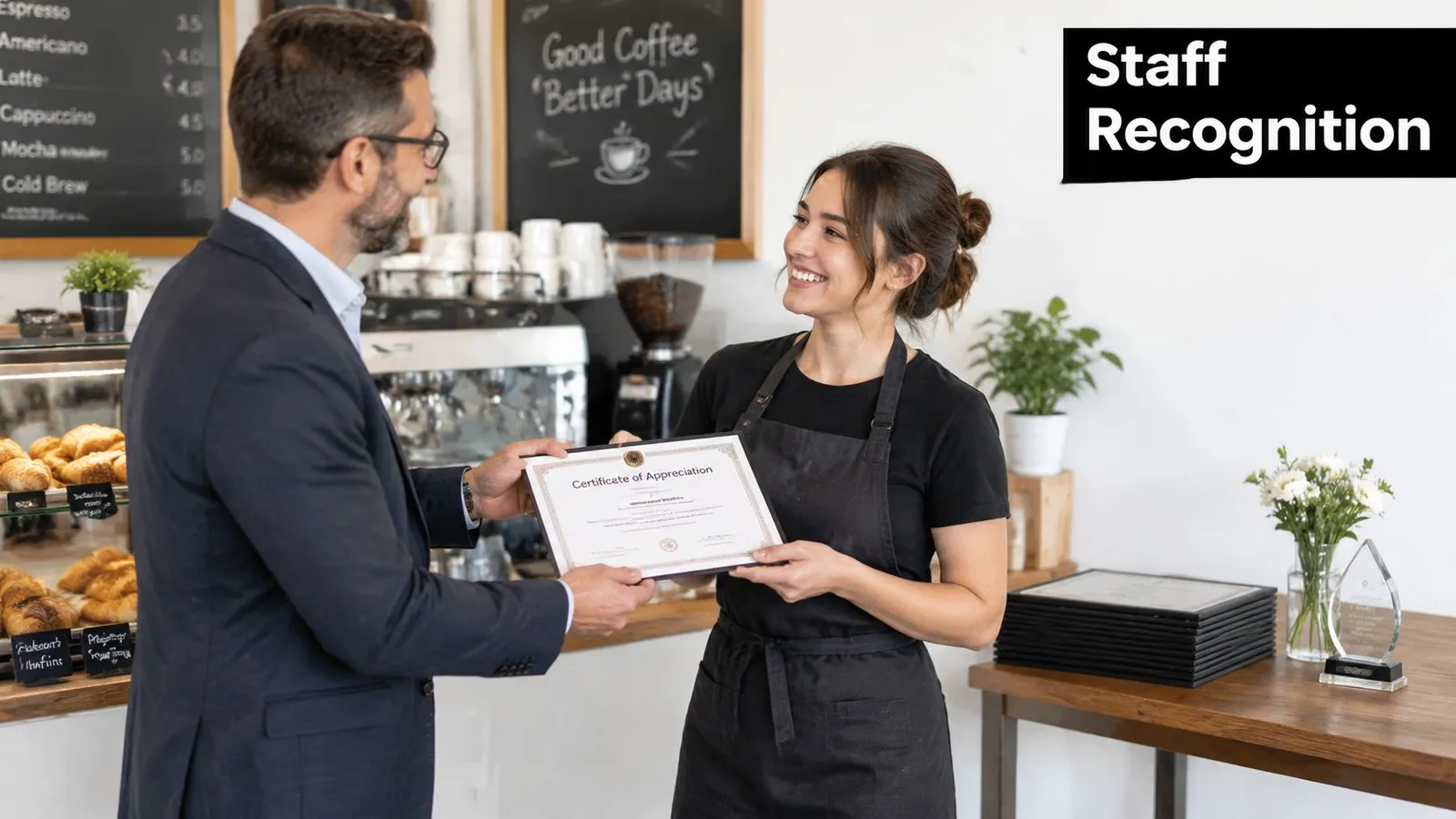
A recognition breakfast works best when it feels specific, fair, and easy for the team to attend. Schedule it before opening or during a reliably quiet service period, then use AnchOps' rolling 90-day performance data to recognize employees for on-time attendance, completed covers, and dependable shift participation.
Pull the data 48 hours before the event. That gives the manager time to check unusual absences, recent corrections, and approved schedule changes before names appear on certificates or internal posts. Public recognition loses credibility quickly if the figures are wrong.
Use several recognition categories rather than celebrating only the highest score. You might recognize employees with 90+ days of strong reliability, employees reaching 60+ days, and people whose scores have improved meaningfully. This creates room for progress without weakening the value of consistency.
Practical rule: Recognize a behavior the team can repeat, not just a person who happens to top a leaderboard.
Pair the announcement with a practical reward, such as preferred shift selection for the next month, a gift card, or extra break time. Share aggregate team trends without exposing sensitive individual details, and post approved photos in internal communications. The approach resembles recognition programs used by large operators such as Starbucks, while restaurant groups also use POS dashboards to celebrate customer service and sales performance.
For a wider playbook, see these staff appreciation activities. Keep the breakfast operationally light: one host, one person handling food, and no bar disruption. The outcome to measure is follow-through, including attendance at the breakfast, subsequent recognition participation, and whether managers see fewer avoidable coverage issues.
You can also borrow ideas from expert-guided engagement ideas when designing the recognition moment.
2. Multi-Location Scheduler Training Workshop Series
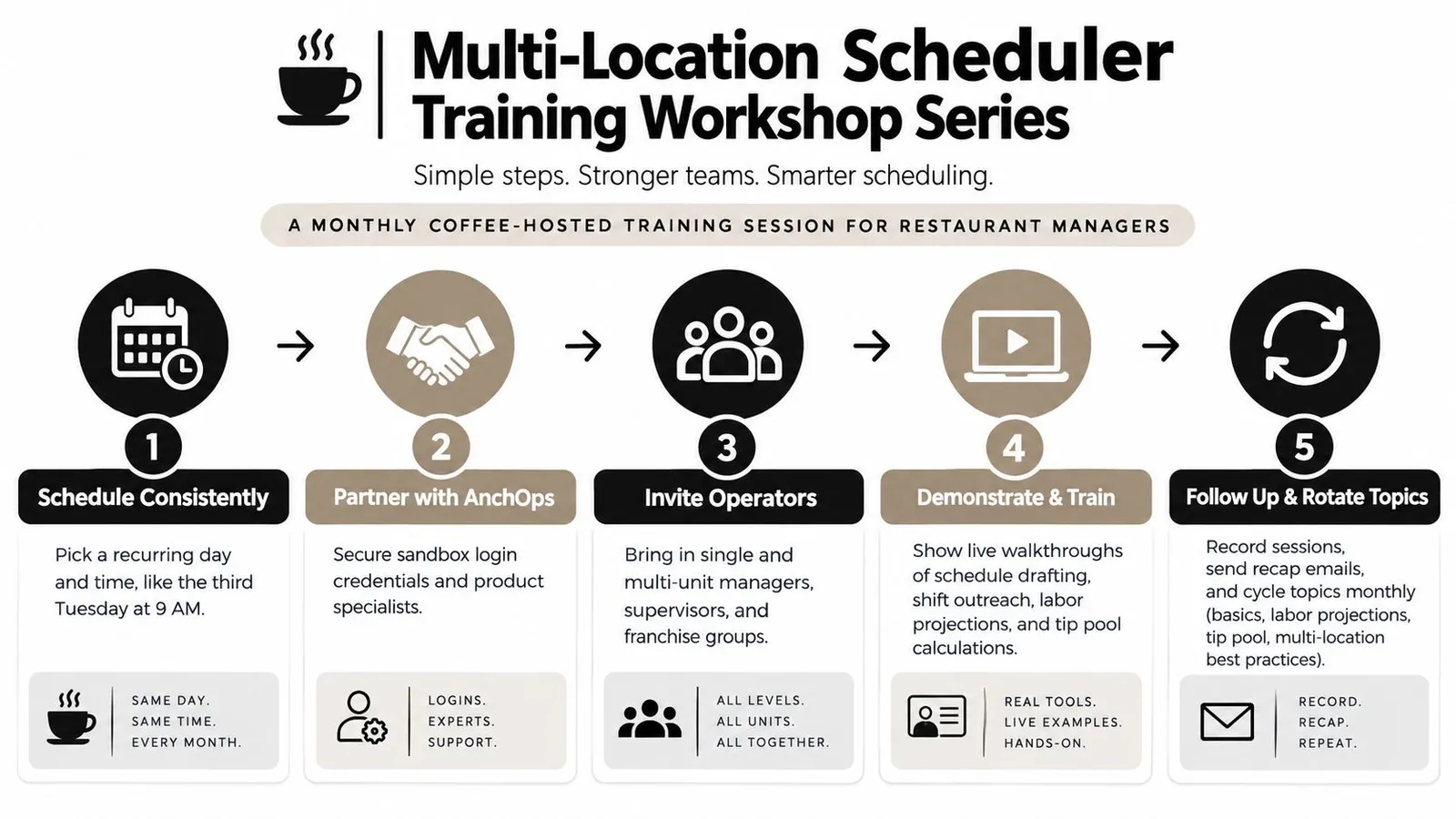
A training workshop should leave managers with a completed task, not just a notebook full of notes. Run a recurring session for shift supervisors, general managers, and operators from single and multi-unit businesses. A consistent schedule, such as the third Tuesday of each month at 9 AM, makes attendance easier to plan and gives you a predictable staffing pattern.
Rotate the subject so the series stays useful. Start with scheduling basics, then move to labor projections, tip pool integration, and multi-location operating practices. Demonstrate AnchOps' autonomous schedule drafts, targeted outreach for open shifts, labor projections, and the adjustable autonomy levels that let each location choose draft-only support or more automated publishing.
Build the session around live practice
Partner with AnchOps to provide login credentials and sandbox data. Managers should draft a schedule, identify a gap, contact qualified employees, and review the resulting labor picture before they leave. Include the web and mobile apps, availability, time off, reliability scores, and tip pool calculations for Toast POS where relevant.
Invite a restaurant manager who already uses AnchOps to explain what changed in their weekly routine. That real operating context is more useful than a product walkthrough delivered entirely by a sales representative. Toast business workshops, Square's small-business education, and local chamber training programs all demonstrate the value of practical, operator-led learning.
Offer coffee and pastries to make the early start worthwhile, then record the session for registered attendees who can't attend. Send reminders 48 hours and 1 hour before the event, and track registrations, attendance, completed sandbox tasks, follow-up questions, and product trials. Assign one host, one technical facilitator, and one café service person if drinks are prepared during the session.
3. Live Payroll Calculation Demo From POS to Paystub
Payroll demonstrations succeed when attendees can follow one transaction through the entire workflow. Invite payroll managers, HR administrators, and general managers to watch a test employee clock in, record sales-linked tips, move through tip pool calculations, and reach a payroll export.
Use a restaurant test environment or sandbox rather than exposing live employee data. The demonstration should show how timecards sync from the POS, how Toast POS data supports automatic pools, tip-outs, delivery, and cash declarations, and how employees can view tip information through the mobile app.
A written Payroll Integration Checklist gives the event a useful take-home asset. Include the state-specific requirements the customer must confirm, the data connections required, the approval steps, and the export process. Don't describe software as a substitute for legal advice. Instead, show where accurate records and transparent calculations reduce manual handling.
Make the labor case visible
A side-by-side worksheet can compare monthly payroll work saved with the organization's own hourly labor cost. Use the attendee's figures rather than inventing a universal benchmark. A payroll manager from a multi-location group can explain how the team replaced manual calculations with a repeatable process.
The most important staffing decision is technical coverage. Use one presenter, one person running the sandbox, and one café employee for service. Keep the audience small enough that each attendee can ask questions without extending the session into a full shift.
For supporting context, direct attendees to payroll automation. Record the session, create a short highlight video, and follow up 48 hours later with a location-specific estimate based on the attendee's sales volume and payroll workflow. Measure checklist downloads, demo completion, qualified follow-up conversations, and requests for an implementation review.
4. Shift Swap and Peer Coverage Social Hour
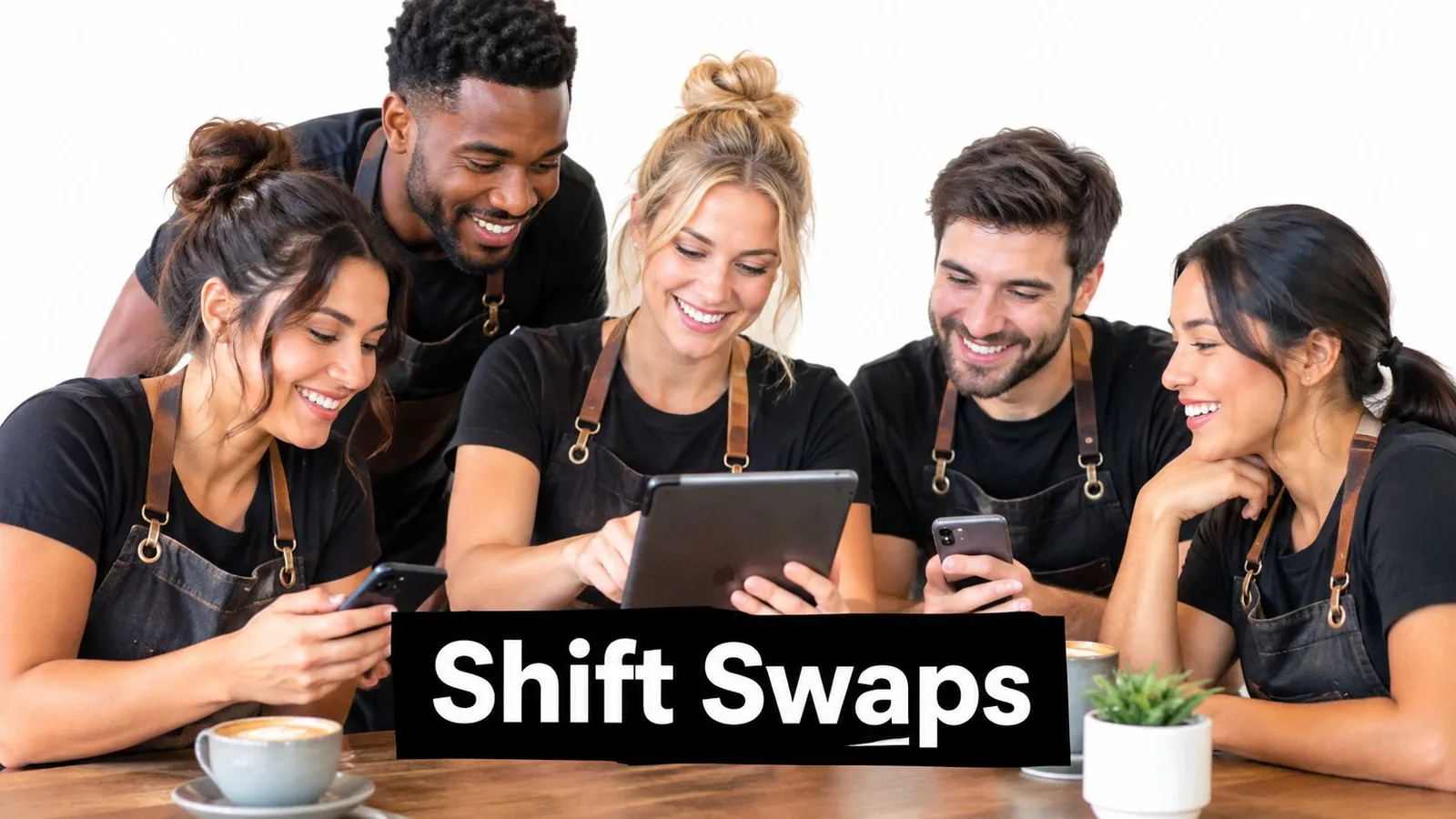
A shift swap event should feel like a social hour, but it needs a clear operational purpose. Invite two or three local restaurant teams and set up a swap station with iPads and iPhones loaded with AnchOps demo accounts. Employees can practice requesting a swap, obtaining coworker approval, and confirming that the schedule updates automatically.
Use the event to identify peer champions. Look for employees who explain the workflow naturally, understand coverage rules, and can support colleagues after returning to their location. These people are more credible internal trainers than a manager who rarely uses the mobile app.
Turn adoption into a visible activity
Create a team leaderboard based on completed practice tasks, not on personal attendance or speed alone. A winning team might receive a $50 Uber Eats card or paid break time to use immediately. Since that reward is part of the event budget, record it in the same cost sheet as drinks, food, staffing, and promotion.
Serve cold brew and espresso drinks, but plan the service around the rush rather than total attendance. Event coffee-service guidance uses a working capacity of about 80 coffees per hour per barista, and it illustrates why 100 drinks across three hours create a very different workload from 100 drinks during a 20-minute break. The coffee service planning guide supports calculating drinks during the busiest window and adding bar capacity when needed.
Capture short, voluntary staff testimonials about how peer coverage affects stress and manager workload. Send in-app notifications during the session so attendees see real-time updates. Measure completed swaps, peer-champion signups, post-event app activity, and the number of coverage questions managers receive afterward.
5. Labor Cost and Scheduling ROI Roundtable for Multi-Unit Operators
This format is for general managers, operations directors, and franchise owners who need to discuss labor without turning the evening into a product pitch. Keep the group small enough for candid conversation, and invite two or three current multi-unit customers to present their own operating experience.
Ask speakers to prepare their figures two to three weeks before the event. The discussion can cover time spent drafting schedules, labor budget overages identified through mid-shift alerts, and the speed of filling open shifts through targeted outreach. Any case study should be real, anonymized, and approved by the customer.
Do not use the sample figures from an internal sales deck as if they were general benchmarks. Operators need a model they can adapt to their own units, managers, shifts, and labor targets.
Give every attendee a calculation tool
Prepare an ROI calculator with fields for:
- Location count: Enter the number of active units.
- Manager workload: Estimate scheduling time using the operator's own records.
- Coverage pressure: Record open shifts, call-offs, and the time spent finding replacements.
- Labor control: Compare planned labor with actuals and identify where alerts could support corrective action.
A confidentiality agreement can make attendees more comfortable discussing financial metrics. Serve premium coffee and a light lunch, then assign one facilitator, one note-taker, and enough café service coverage to avoid interrupting the discussion. Provide a video recap and key takeaways to registered attendees who miss the event.
Operators don't need a universal ROI promise. They need a calculation they can defend internally.
Follow up within 48 hours with a personalized estimate based on the operator's chain size and concept. Track completed calculators, qualified conversations, implementation requests, and the difference between registered and attended operators.
6. Mobile App Adoption Sprint From Download to Daily Use
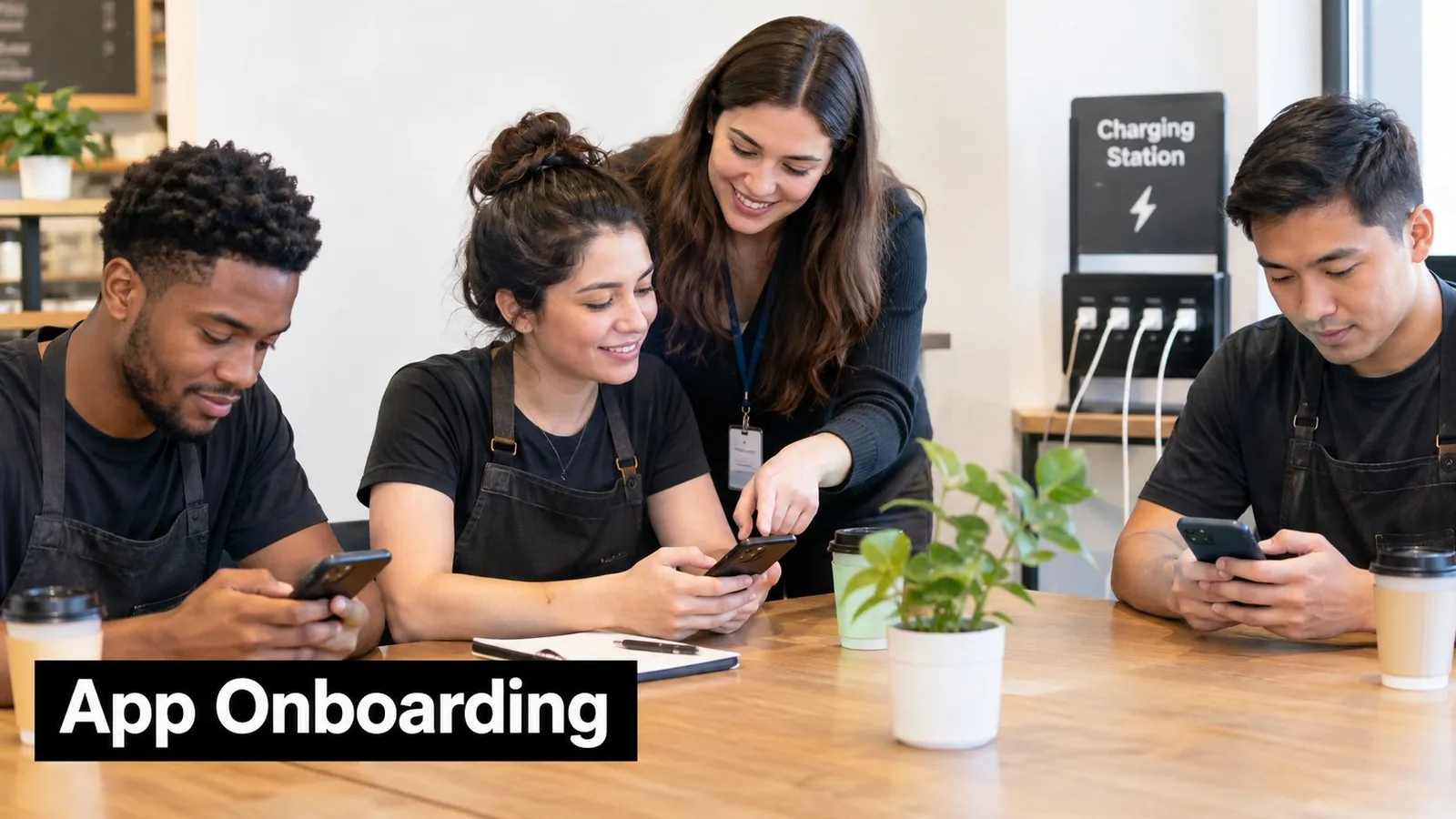
A mobile adoption sprint works best shortly after launch, while employees still have questions and managers are motivated to build a routine. Schedule it one to two weeks after the customer starts using AnchOps. Limit each session to 15 to 20 people so the support team can assist without creating another queue.
Start with a simple sequence. Each participant downloads the native iOS or Android app, logs in, views a schedule, checks availability, reviews a reliability score, completes a task, and learns how to request time off, confirm a shift swap, and track tips. A visible checklist gives the facilitator a way to identify where users stop.
Pair new users with a buddy from another location who already uses the app confidently. The buddy shouldn't take over the device. Their job is to show how the workflow fits into a real shift, especially when employees need to check schedules or respond to coverage requests away from a desktop.
Staff the sprint as a help desk
Use one facilitator for the room, one technical support person, and one café employee for service. Send calendar invitations and push notifications 48 hours, 24 hours, and 1 hour before the session. Follow up three days later with a short usage survey and an offer of additional support.
Celebrate completed milestones through internal shout-outs, but don't pressure employees to share personal data publicly. Measure daily active users, feature adoption, support ticket volume, completed app tasks, and successful shift confirmations. A coffee house is useful here because it creates a low-pressure setting, but the event should still be run like a controlled onboarding clinic.
7. Tip Transparency and Fair Distribution Panel Discussion
Tip discussions can become defensive if the panel is built around software features instead of employee concerns. Recruit restaurant managers, staff members, payroll professionals, and, where appropriate, a labor attorney. Invite panelists four to six weeks in advance, then brief them on the questions likely to create disagreement.
Start with a short personal story from each panelist, limited to two minutes, about a confusing tip process, a successful correction, or a time when transparent records protected the team. Use a moderator who can challenge vague answers and keep the AnchOps sales team from controlling the conversation.
The core topics are practical: manual math errors, perceived favoritism, cash handling risk, and how staff can verify tip distribution. Demonstrate how Toast POS integration supports automatic tip pools, tip-outs, delivery, and cash declarations from sales data, but keep the discussion focused on the trust problem that the workflow is meant to address.
Prepare for difficult questions
Create three or four pre-screened questions in case the audience is initially quiet. Give attendees a Tip Pool Audit Checklist covering records, approvals, wage and hour review, and employee communication. Have legal counsel review the materials, and make clear that general education isn't a substitute for advice about a specific jurisdiction.
Specialty drinks with names such as fair-trade pour-over can reinforce the theme without turning the event into a gimmick. Record the panel and edit a 10-minute highlight for later education, using verified participant comments rather than manufactured testimonials. Track attendance, questions submitted, checklist downloads, requests for payroll reviews, and employee confidence in the post-event survey.
8. Gas Station and Convenience Store Staffing Masterclass
A café event doesn't have to target cafés. Gas station and convenience store managers face different coverage problems, especially across overnight shifts, extended hours, seasonal demand changes, and small teams with little room for absence. Build the session around those realities instead of presenting a restaurant schedule as a universal template.
Co-host with a regional gas station or convenience store group. Demonstrate autonomous schedule drafts, targeted outreach, reliability scoring, and location-level autonomy for operations that run around the clock. Show how managers can identify proven-reliable employees without depending on the same small group of people for every difficult shift.
Schedule the event at 6 AM or 7 AM if graveyard-shift managers are part of the audience. The café needs one presenter, one technical demonstrator, and one service person. Offer coffee and a concise breakfast, then leave enough time for managers to test a sample overnight schedule and respond to an open-shift request.
Use the operator's economics
A staffing-efficiency calculator should include low average wage conditions, a high labor percentage, overnight coverage, and the cost of leaving a shift vacant. Don't publish a fabricated retention percentage or vacancy reduction. Use the operator's own baseline and compare it with later coverage results.
Discuss how reliability scores can inform assignments for undesirable hours without turning the score into a punishment. Employees should understand how attendance, lateness, covers, and no-shows affect the record and how managers use the information.
Offer a 30-day free trial only if that offer is current and approved. A case study PDF should contain a real customer, verified figures, and written permission. Measure trial starts, completed overnight schedules, filled open shifts, and follow-up meetings with regional operators.
9. Compliance and Labor Law Breakfast
A compliance breakfast needs legal expertise and careful boundaries. Partner with a local employment law firm two to three months before the event so the speaker has time to address predictable scheduling laws, overtime thresholds, tip pooling, break requirements, and state-specific rules.
Invite HR consultants, employment law specialists, and AnchOps operators. The session can show how accurate timekeeping, labor projections, mid-shift alerts, and transparent tip calculations support compliance processes. It must not imply that scheduling software eliminates legal responsibility or guarantees compliance.
Prepare a state-specific checklist for the major regions where the business operates. Have counsel review every claim and explain which rules require local interpretation. Avoid inserting settlement amounts, fines, or recent case examples unless the figures and legal context are verified for the event materials.
Connect policy to daily scheduling
The manager should leave with a compliance calendar covering relevant deadlines and rule changes for the next 12 months. A searchable transcript can extend the event's usefulness, but publish only reviewed content and remove confidential questions.
Use one legal moderator, one AnchOps product specialist, and one café service worker. Breakfast service should be completed before the legal presentation begins, so staff aren't moving through the room while attendees are discussing wage and hour risks.
For a practical companion, share employee policies for restaurants. Offer AnchOps customers a free 30-minute compliance audit consultation after the event, with clear limits on what that consultation covers. Measure registrations by state, attendance, checklist downloads, consultation requests, and policy questions submitted.
10. Quick-Service and Fast-Casual Speed Networking
Speed networking works when the conversations are structured tightly. Invite quick-service and fast-casual operators, Toast POS partners, resellers, and complementary hospitality vendors four to six weeks in advance. Ask each attendee to identify their top three operational challenges at registration.
Set up a matchmaking booth at the entrance, then rotate participants through five-minute conversations about scheduling gaps, labor visibility, POS workflows, and coverage pressure. A visible timer and bell or chime should signal the final minute and the end of each round. Give each person a printed prompt card with five questions so the sessions don't collapse into vague introductions.
Protect the follow-up value
Use a simple spreadsheet or speed-networking app to record conversations and suggested introductions. Brief AnchOps staff and partner representatives on two or three key talking points, but don't let them turn every round into a product demo. The event's value comes from useful matches, not the number of branded slides.
Staff with one host, one person managing the timer and attendance, one person at the matchmaking booth, and café service coverage aligned to arrival and break periods. Offer a limited menu during the busiest networking window so the bar doesn't compete with the conversations.
Send follow-up emails within 24 hours, including suggested introductions based on the notes. Use a two-minute survey focused on qualified leads, useful matches, and unresolved operational problems. Measure completed conversations, introductions accepted, qualified opportunities, partner meetings, and attendee satisfaction.
Coffee House Event Ideas: 10-Point Comparison
| Event | 🔄 Implementation Complexity | ⚡ Resource Requirements & Speed | 📊 Expected Outcomes | Ideal Use Cases | ⭐ Key Advantages & 💡 Quick Tip |
|---|---|---|---|---|---|
| Staff Appreciation & Reliability Recognition Breakfast | 🔄🔄 (Low–Med), simple logistics, sensitive handling | ⚡⚡, low cost, minimal tech (app display optional) | ↑Reliability & morale; modest reduction in no-shows | Small–mid cafe teams; culture-building moments | ⭐⭐⭐⭐ Motivates attendance via visible metrics. 💡Host off-peak; use tiered recognition. |
| Multi-Location Scheduler Training Workshop Series | 🔄🔄🔄 (Med), recurring curriculum & coordination | ⚡⚡⚡, AnchOps specialists, AV, sandbox data | ↑Feature adoption, ↑ROI realization, referrals | Multi-unit operators, GMs, franchise groups | ⭐⭐⭐⭐ Educates users and creates pipeline. 💡Record sessions; rotate topics monthly. |
| Live Payroll Calculation Demo: From POS to Paystub | 🔄🔄🔄🔄 (High), live POS integration & compliance detail | ⚡⚡⚡⚡, Toast POS sandbox, technical staff, demo data | ↑Trust from HR, ↓payroll errors, faster procurement decisions | Payroll managers, HR, finance decision-makers | ⭐⭐⭐⭐⭐ Addresses payroll pain; strong differentiator. 💡Use sandbox Toast and provide payroll checklist. |
| Shift Swap & Peer Coverage Social Hour | 🔄🔄 (Low–Med), casual event, requires coordination | ⚡⚡, demo devices, leaderboard, small prizes | ↑App adoption among frontline staff; ↓manager workload | Hourly teams, frontline staff adoption drives | ⭐⭐⭐ Engaging, peer-driven adoption booster. 💡Gamify swaps and supply demo devices. |
| Labor Cost & Scheduling ROI Roundtable for Multi-Unit Operators | 🔄🔄🔄 (Med), confidential case studies & facilitation | ⚡⚡⚡, data prep, small premium venue, anonymized metrics | ↑Enterprise conversions, broader rollouts, strategic buy‑in | Multi-unit operators, operations directors, franchise owners | ⭐⭐⭐⭐ Converts high-value prospects. 💡Bring anonymized ROI cases and ROI calculator template. |
| Mobile App Adoption Sprint: From Download to Daily Use | 🔄🔄🔄 (Med), hands-on support needed | ⚡⚡⚡, support staff, Wi‑Fi/charging, demo accounts | ↓Onboarding time, ↑DAU, ↓support tickets | Newly onboarded customers and non‑technical staff | ⭐⭐⭐⭐ Reduces churn by accelerating proficiency. 💡Limit to 15–20 attendees; follow up after 3 days. |
| Tip Transparency & Fair Distribution Panel Discussion | 🔄🔄🔄 (Med), sensitive moderation & legal prep | ⚡⚡⚡, panelists, legal review, handouts | ↑Staff trust, ↓disputes, positive PR | Managers, tipped staff, payroll, legal advisors | ⭐⭐⭐⭐ Builds credibility on fairness and compliance. 💡Use a skilled moderator and provide a tip-audit checklist. |
| Gas Station & Convenience Store Staffing Masterclass | 🔄🔄🔄 (Med), vertical-specific content creation | ⚡⚡⚡, tailored case studies, specialized materials | ↑New vertical adoption, targeted ROI for 24/7 ops | C-store/gas station managers, 24/7 operations | ⭐⭐⭐ Expands into underserved vertical with clear ROI. 💡Co-host with regional chain; highlight overnight scenarios. |
| Compliance & Labor Law Breakfast: Staying Ahead of Regulations | 🔄🔄🔄 (Med), legal partner coordination, updating content | ⚡⚡⚡, attorney fees, state checklists, materials | ↓Compliance risk, ↑advocacy from HR/payroll teams | HR, payroll, legal-minded operators | ⭐⭐⭐⭐ Positions AnchOps as a compliance enabler. 💡Partner with local employment counsel and share state checklists. |
| Quick-Service & Fast-Casual Speed Networking: Connect with Toast Partners | 🔄🔄🔄🔄 (High), logistics, matchmaking, attendee volume | ⚡⚡⚡⚡, event tech, staffing, minimum critical mass | ↑Qualified leads, partnership opportunities, ecosystem visibility | Toast ecosystem partners, QSR operators, vendors | ⭐⭐⭐⭐ Generates high‑quality leads and partnerships. 💡Use pre-event surveys for matchmaking and follow up within 24h. |
Choose Two Events and Put Them on the Calendar
Start with one staff-facing event and one operator-facing event. They solve different problems. Recognition breakfasts and shift-swap socials build attendance, trust, and coverage habits, while workshops and roundtables bring in managers and multi-unit owners who need stronger scheduling, labor, and payroll processes.
Before committing, estimate the cost from your own coffee, pastry, equipment, promotion, and staffing rates. Then compare that cost with the manager hours or overage labor the event could prevent. Don't forecast revenue from attendance alone. Record registrations, actual attendance, service transactions, labor hours, follow-up actions, and the operational result each event was designed to produce.
Choose a date outside peak service whenever possible. If you must run the event during a busy period, identify arrival and break rushes, calculate beverage demand during the busiest 15-to-30-minute window, and add a barista or second service point when queues would otherwise form. Event coffee guidance also warns that there isn't one universal barista-to-guest ratio, because gradual arrivals create a different workload from a simultaneous break release. The event barista staffing guidance supports planning around concentrated demand rather than total attendance.
Beverage planning should use attendance, event duration, and a contingency buffer. One published planning method recommends one cup per guest for every hour plus a 20% buffer, which means a two-hour event for 100 people would require approximately 240 cups under that method. Use the coffee quantity planning method as a starting point, then adjust for decaf, tea, matcha, cold drinks, and the program's actual pace.
Private events also need lead time. A coffee-shop booking guide reports that venues commonly recommend reserving two to four weeks ahead for weekday events and four to eight weeks ahead for weekend or evening private events. Use the private coffee shop booking guidance when setting your internal request deadlines, especially if the event needs a buyout, special menu, room layout, or additional staff.
Assign one person to pull operational data 48 hours ahead, verify the attendee list, confirm speakers, and check the staffing plan. Send reminders at 48 hours and 1 hour, then review attendance and follow-up results after the event. Keep the format that produced the clearest outcome, revise the weak parts, and stop repeating events that consume labor without improving coverage, adoption, or qualified operator conversations.
For broader corporate event planning best practices, keep the same discipline: define the outcome before booking the room, assign ownership, and make the post-event review part of the schedule.
AnchOps helps shift-based teams automate schedule drafts, open-shift outreach, peer swaps, timekeeping, reliability tracking, labor projections, and Toast POS tip calculations. Visit AnchOps to connect your next coffee house event to the staffing data and follow-up workflow that keeps the event commercially useful.
Your back-of-house partner is ready
AnchOps handles scheduling, tip calculations, labor costs, and timecards — so you can focus on your restaurant, not your paperwork.