Essential Restaurant Server Duties: A 2026 Guide
Published on
By Tony Newcome — Founder of AnchOps · Owner, Pizza Harbour
This article was drafted with AI assistance and reviewed by Tony Newcome, a working restaurant operator.
Restaurant server duties run well beyond carrying plates: taking orders and managing guest requests, delivering food and beverages, processing payments and handling cash, guest relations, and managing table turnover and pacing. The server is the link between guest, POS, kitchen, and bar — when those duties are clear, trained, and managed, margins stop leaking into comps, remakes, and labor waste.
Across town, another restaurant is just as busy. But plates land in the right order, tables turn without feeling rushed, and the floor team talks to the kitchen like they're on the same side. That kind of shift doesn't happen because they got lucky with better personalities. It happens because the restaurant server duties are clear, trained, and managed like operating standards instead of vague expectations.
That's the part too many operators miss. Servers aren't just there to be friendly and carry plates. They're the link between the guest, the POS, the kitchen, the bar, the payment process, and the timing of the whole room. When that link is weak, margins disappear in comps, remakes, labor waste, and bad reviews. When it's strong, service gets faster, cleaner, and more predictable.
The role is also bigger than many owners assume. The Bureau of Labor Statistics says waiters and waitresses had a median hourly wage of $16.23 in May 2024, and despite a projected decline in employment, the occupation is still expected to have about 456,700 openings per year on average over the decade, which shows how central and high-turnover this role remains in restaurant operations according to the BLS overview of waiters and waitresses.
Table of Contents
- 1. Taking Orders and Managing Guest Requests
- Get the order right before speed matters
- What works on a busy floor
- 2. Food and Beverage Delivery and Plate Management
- Run the plate with intent
- Where service flow usually breaks
- 3. Payment Processing and Cash Handling
- Close the table cleanly
- Controls that prevent end-of-night problems
- 4. Customer Service and Guest Relations
- Hospitality is operational, not decorative
- How strong servers recover bad moments
- 5. Managing Table Turnover and Pacing
- Pacing is a floor skill
- What smart pacing looks like in practice
- 6. Recommending and Upselling Menu Items and Beverages
- Sell like a guide, not a script
- Upselling that guests actually appreciate
- 7. Coordinating with Kitchen, Bar, and Support Staff
- Communication has to be specific
- Build team habits, not heroics
- 8. Health, Safety, and Sanitation Compliance
- Safety failures usually start small
- Standards that need zero debate
- Restaurant Server Duties, 8-Point Comparison
- Build Your System for Service Excellence
1. Taking Orders and Managing Guest Requests
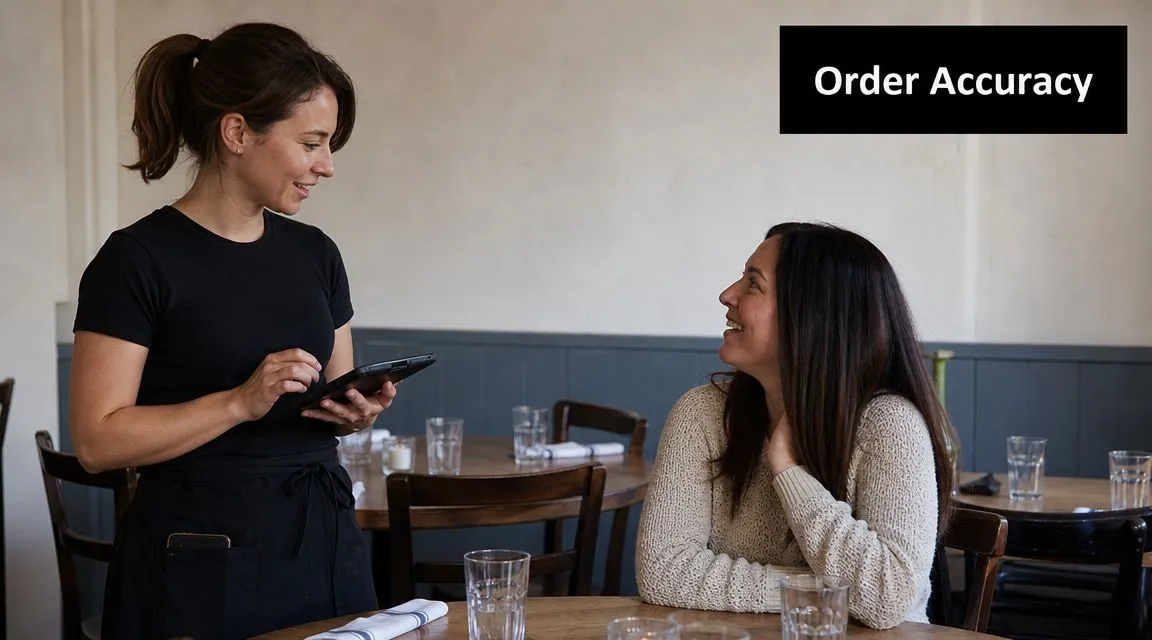
A lot of service failures start at the first touchpoint. Not at the pass. Not when the food hits the table. They start when a server half-hears an order, skips a modifier, forgets an allergy note, or tries to rely on memory for one table too many.
Modern restaurant server duties absolutely include order accuracy, special requests, menu explanation, and coordination with kitchen and bar staff. That broader workflow shows up clearly in Indeed's restaurant server job description, which describes servers as welcoming diners, taking food and drink orders, explaining menu items and allergy concerns, collaborating with kitchen and bar staff, and handling payment and receipts. That's a much bigger job than “write order, run food.”
Get the order right before speed matters
In a fast-casual operation using Toast handhelds, speed matters. In fine dining, detail matters more. In both cases, accuracy comes first because a fast wrong order still creates a remake, a delayed table, and an irritated guest.
I train servers to repeat back custom requests before they hit send. If a guest says “burger medium, no onion, sauce on the side, gluten-sensitive,” the server should confirm every piece out loud. That takes a few extra seconds and saves a lot of cleanup later.
Practical rule: Never trust memory when the POS can store the exact instruction.
What works on a busy floor
The best servers don't just know the menu. They know how the menu is built inside the POS. They use modifiers correctly, know where common substitutions live, and understand how their input affects kitchen tickets.
- Use preset modifiers: Build habits around standard buttons instead of typing freehand whenever possible. Kitchen teams read consistent tickets faster.
- Group related requests: Enter allergy notes, cook temps, side swaps, and sauce requests in a clean order. Messy tickets slow the line down.
- Ask one more question: If a guest orders a salad with protein, make sure the server confirms dressing choice and temperature preference if the menu allows it.
- Train with real tickets: Practice with actual order scenarios from the restaurant, not generic menu quizzes.
One thing operators often miss is the downstream effect of clean order entry. If you run Toast with a labor platform like AnchOps, accurate orders don't just help the kitchen. They also support cleaner operational data for forecasting and staffing decisions. Garbage in still means garbage out.
2. Food and Beverage Delivery and Plate Management
The guest doesn't care that the ticket was entered perfectly if the wrong plate lands in front of them, the fries are dying in the window, or the appetizer and entrée crash the table at once. Delivery is where execution becomes visible.
In upscale rooms, delivery looks polished and quiet. In high-volume casual concepts, it looks fast and coordinated. Different style, same standard. Food gets to the right seat, at the right temperature, with the right timing, and the table stays under control from first drop to last clear.
A quick visual on floor movement and handling helps more than a lecture:
Run the plate with intent
Strong servers scan plates before they leave the pass. They check seat positions, garnish consistency, missing sides, and obvious temperature issues. Weak servers become runners with no eyes. That's how avoidable mistakes make it to the table.
I've seen plenty of restaurants tighten service just by teaching one habit: pause at the pass for a real check. Not a dramatic inspection. A fast, disciplined look.
- Call the dish clearly: Don't auction food if you can avoid it. Know who ordered what before you leave the kitchen.
- Watch the slowest diner: Clearing too early makes the table feel pushed. Clearing too late makes the room feel sloppy.
- Reset the same way every time: Glassware, rolled silver, wipe, align, then final scan. A repeatable reset beats a “good enough” reset.
- Escalate plate problems immediately: If a steak is wrong or a garnish is missing, fix it before it crosses the room.
Where service flow usually breaks
The most common breakdown isn't dramatic. It's small delays stacking up. A server waits too long to run drinks. Another drops entrées before pre-bussing appetizers. Nobody communicates that table eight wants to hold dessert. Now the room feels choppy.
That's why plate management is tied directly to labor efficiency. When service flows cleanly, bussers can move with purpose, hosts can quote waits more confidently, and managers aren't covering preventable gaps. Even details outside the plate matter. If you're rethinking service ware and takeout presentation, practical pieces like Afida's guide on eco-cutlery can help operators align service standards with guest expectations.
Food delivery isn't a carrying task. It's a timing task.
3. Payment Processing and Cash Handling
A table isn't done when dessert lands. It's done when payment is processed correctly, the guest leaves without friction, and the shift closes without a stack of unresolved discrepancies. Too many operators treat this as simple admin work. It isn't.
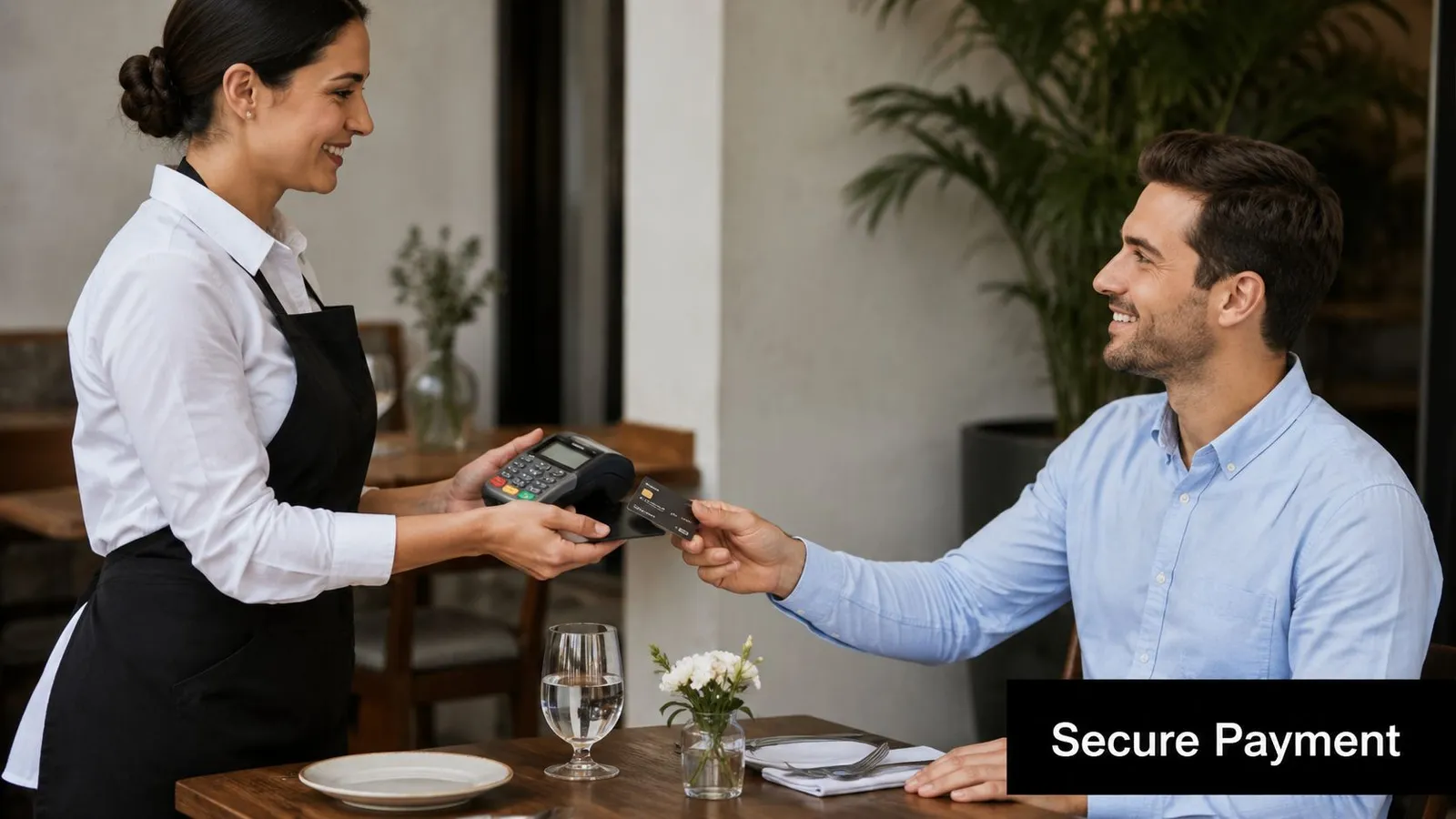
Payment handling is one of the highest-risk parts of restaurant server duties because small mistakes create outsized headaches. A missed void, a card run twice, a comp with no note, cash that isn't dropped correctly. Those aren't “paperwork” issues. They affect trust, payroll, and closeout accuracy.
Close the table cleanly
The guest experience often falls apart at the very end. The server disappears when the table is ready to pay. The terminal takes too long. Split checks become a scene. That leaves a bad last impression even after a strong meal.
Good servers learn to read the payment moment. If guests are stacking plates, pulling out cards, or stopping conversation to look around, they're done. Move.
Manager's note: Fast payment feels like good service. Slow payment feels like being trapped.
If your operation uses pooled tips, automatic gratuity rules, or service charges, servers also need to understand how those systems work before they explain them to guests. Otherwise, confusion creates conflict. A clear operator policy, paired with practical guidance like AnchOps' breakdown of service charge vs tip, helps avoid awkward table-side explanations and back-office disputes.
Controls that prevent end-of-night problems
This is one area where rigid process beats personality. Friendly servers still make costly mistakes if the process is loose.
- Verify before returning anything: Confirm the card ran, the amount is correct, and the receipt status is complete before handing back a card or change.
- Document every adjustment: Refunds, voids, discounts, and comps need a reason. “Manager approved” isn't enough if nobody knows why later.
- Reconcile during the shift: Don't wait until close to discover that one table never got settled properly.
- Teach the tip policy exactly: If staff can't explain tip-out or pooled distributions clearly, they'll invent explanations on the fly.
Restaurants using Toast and AnchOps have a real advantage here because payment data can feed tip calculations without somebody doing nightly spreadsheet math. That doesn't remove the need for discipline. It just removes a common source of manual error.
4. Customer Service and Guest Relations
Hospitality gets talked about like it's some soft skill you either have or you don't. In practice, it's a set of behaviors that keep guests calm, informed, and willing to come back. That makes it operational.
Yelp's server guidance, referenced alongside Indeed in the verified data, emphasizes menu knowledge, prompt service, interaction with kitchen staff, payment processing, and POS use as core duties. That's worth paying attention to because it reinforces a simple truth. Guest service isn't separate from execution. It sits on top of execution.
Hospitality is operational, not decorative
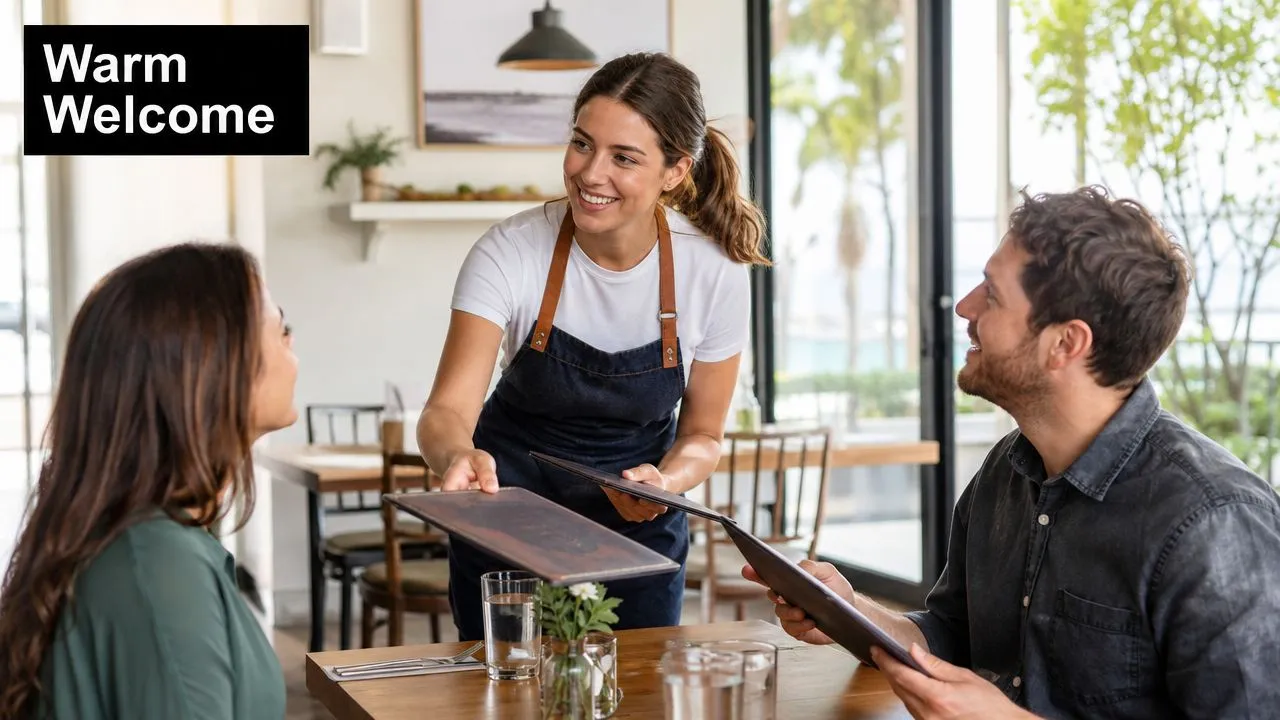
A strong greeting does two things. It makes the guest feel seen, and it starts control of the table. The server sets expectations, introduces the menu, spots urgency, and starts reading personalities right away.
Some guests want guidance. Some want speed. Some want minimal interruption. Servers who miss that distinction often sound polished but deliver bad service because they force the same rhythm on every table.
- Open with awareness: A business lunch table needs different pacing than a birthday party.
- Use menu knowledge to reduce hesitation: Guests relax when the server can answer ingredient and preparation questions without running off three times.
- Check back with purpose: Don't interrupt every two minutes. Check after the first few bites or shortly after drinks land.
- Own the problem: If something goes wrong, the guest wants a solution, not a story about whose fault it was.
How strong servers recover bad moments
The best service I've seen wasn't on perfect nights. It was on messy ones where the staff recovered fast and didn't get defensive.
If the bar is backed up, tell the table early. If the kitchen is long on one dish, give a realistic update. If an entrée was missed, apologize, fix it, and stay present until the recovery is complete. Guests can forgive mistakes. They rarely forgive being ignored.
Reputation gets shaped by dozens of these moments. That's why operators who care about repeat business also pay attention to feedback systems and public review patterns. Practical resources like guidance on optimizing restaurant reviews can help managers connect service habits to what shows up online later.
5. Managing Table Turnover and Pacing
Some servers think table turnover means rushing people. Bad managers think that too. Good operators know pacing is about controlling dead time, not pushing guests out the door.
A table that waits too long between touchpoints feels neglected. A table that gets every course too fast feels processed. Both are failures. The server's job is to keep the meal moving at the speed the guest wants, while still protecting the flow of the dining room.
Pacing is a floor skill
I tell new servers to stop watching the fastest eater. Watch the person who's least ready for the next step. That's usually the actual pace of the table.
In a high-volume restaurant, pacing problems often come from poor communication upstream. A server fires everything too soon, or forgets to hold dessert, or lets a table sit with empty glasses while the kitchen is ready to turn the next course. Small misses pile up fast.
If guests have to ask what's happening next, pacing already slipped.
What smart pacing looks like in practice
Good pacing feels almost invisible to the guest. The table gets what it needs before it asks, but never feels hovered over.
- Read intent early: Guests looking at watches or moving quickly through drinks usually want an efficient meal.
- Course with the kitchen, not against it: Let the line know when a table is lingering over apps or when a large party is ready to move.
- Pre-bus constantly: Dirty tables kill momentum and make the room look full even when seats are about to reopen.
- Reset fast and clean: Hosts can't seat the next party if the floor team leaves half-finished resets all over the room.
Effective service relies on sales forecasting and scheduling. If your staffing model doesn't match expected volume, servers and bussers can't maintain pace no matter how hard they work. Operators using tools like AnchOps sales forecasting for restaurants can make better staffing decisions before service starts, instead of trying to patch labor problems in the middle of a rush.
6. Recommending and Upselling Menu Items and Beverages
A lot of upselling fails because it sounds like upselling. Guests can hear it immediately. They don't want a script. They want useful guidance from someone who knows the menu and can make the meal better.
That means this duty starts with product knowledge, not sales pressure. If a server can't explain how a cocktail tastes, what makes one entrée heavier than another, or which dessert works after a rich main, they won't sell with confidence. They'll just ask, “Want an appetizer?” and hope.
Sell like a guide, not a script
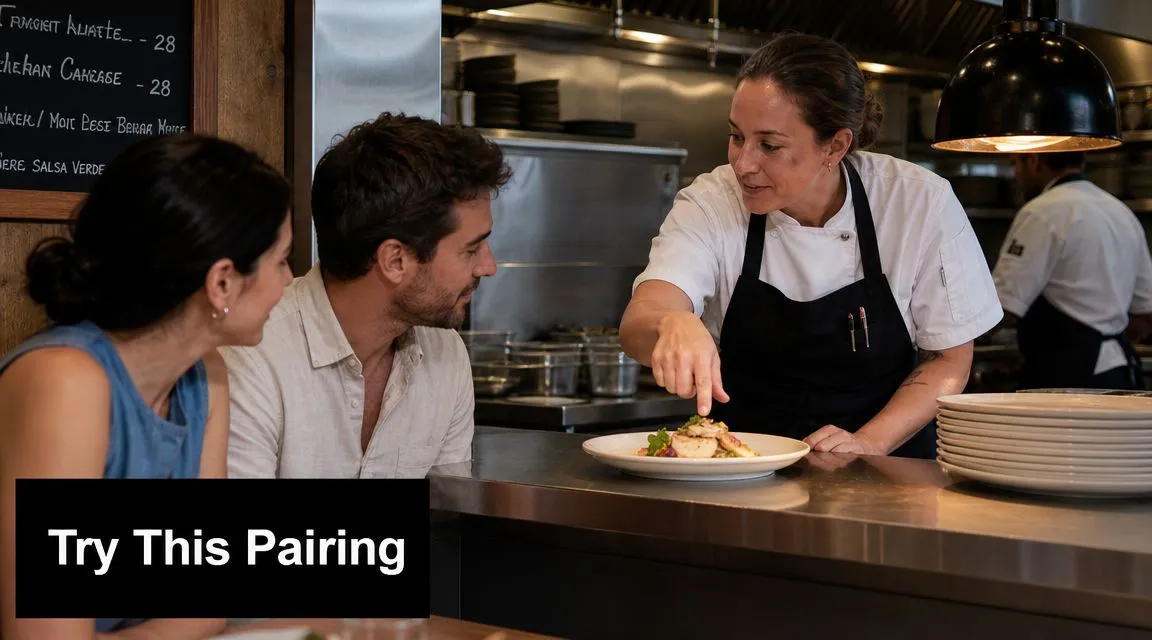
The strongest recommendation is specific. “Our smoked old fashioned goes really well with the ribeye” beats “Do you want a drink?” every time because it removes decision friction.
In casual dining, that might mean steering guests toward a signature appetizer while they settle in. In fine dining, it might mean a thoughtful wine pairing or a dessert course framed around the meal they just had. Same principle. Make the suggestion feel like service.
- Lead with fit: Recommend based on what the guest ordered or how they describe their preferences.
- Use descriptive language: Taste, texture, portion, and preparation matter more than hype.
- Time the suggestion well: Appetizers land best when drinks are ordered. Desserts land best after plates are cleared and the table resets mentally.
- Know what not to push: If a guest is in a hurry or clearly price-conscious, aggressive selling backfires.
Upselling that guests actually appreciate
I've had servers increase check quality just by replacing generic questions with informed recommendations. Not more talking. Better talking.
A brunch server might say, “If you want something lighter, the avocado toast works well, but if you're really hungry the chicken biscuit is the move.” That helps the guest decide. A dinner server can do the same with cocktails, sides, after-dinner drinks, or dessert.
What doesn't work is robotic phrasing or trying to push premium items without context. Guests don't resent suggestions. They resent feeling handled.
7. Coordinating with Kitchen, Bar, and Support Staff
Service falls apart when the front and back of house act like separate businesses. A server can be polished with guests and still damage the shift if they communicate poorly with cooks, bartenders, bussers, and hosts.
This part of restaurant server duties matters more than many job descriptions admit. The role sits in the middle of the operation, which means every vague message gets multiplied. “No nuts” is not the same as “nut allergy.” “Table wants food now” is not the same as “fire entrées after the appetizer plates are cleared.”
Communication has to be specific
The busiest shifts expose every weak communication habit. Servers who mumble at the pass, skip seat numbers, or toss vague verbal requests create confusion that the kitchen has to sort out under pressure.
Strong teams use consistent language and put critical details in the POS, not just in conversation. If a guest has an allergy, if a steak needs to be re-fired, if the bar should hold a round until appetizers land, that information needs to be clear and visible.
“Be nice” helps. “Be precise” helps more.
Build team habits, not heroics
The best floors don't rely on one superstar server dragging everyone through service. They build repeatable team behaviors.
- Run food when you can: If another section is in the weeds and you're passing the window, help.
- Thank the back of house: Respect doesn't fix a bad system, but it does reduce friction when the pressure is on.
- Learn realistic ticket timing: Don't promise the guest five minutes if you know the line is buried.
- Use pre-shift huddles well: Clarify specials, eighty-sixes, large parties, staffing gaps, and expected pressure points before doors open.
Scheduling matters here too. Coordination gets harder when support positions are thin or section assignments don't reflect actual demand. That's why labor planning tools like AnchOps staff schedule creation guidance matter to service quality, not just payroll control.
8. Health, Safety, and Sanitation Compliance
Nothing kills trust faster than a guest thinking your restaurant is careless with food safety. And in most restaurants, safety problems don't begin with one massive failure. They begin with shortcuts that staff start treating as normal.
A server grabbing ready-to-eat food with bare hands. A table reset done with a dirty towel. An allergy note mentioned casually instead of confirmed. A spill left in a walkway because someone assumed the busser would get it. That's how small habits turn into serious risk.
Safety failures usually start small
Servers need to treat sanitation as part of service, not as side work that happens when things slow down. Clean hands, clean surfaces, clear allergen communication, and immediate hazard reporting have to stay in play during the rush, not just at open and close.
This is one area where I want staff to slow down. If they're unsure whether a request is an allergy, whether a plate should be remade, or whether a surface is properly sanitized, they need to ask. Nobody gets in trouble for asking a safety question in a well-run restaurant.
- Confirm allergen concerns clearly: Don't paraphrase. Repeat back what the guest said and enter it correctly.
- Wash hands at the right moments: Before handling food-contact items and after touching anything contaminated.
- Keep reset tools clean: Towels, sanitizer buckets, and wiping supplies need to be maintained, not just present.
- Report hazards immediately: Spills, broken glass, temperature issues, and equipment problems need action right away.
Standards that need zero debate
Some service habits are style choices. Safety habits aren't. There's no room for “my way” when guest health is involved.
Servers should know local health code basics, house allergen protocol, and who to notify when something looks off. Managers should document complaints about food quality or suspected illness and keep communication tight with the kitchen. Even peripheral cleaning issues matter because they shape overall sanitation standards. For operators reviewing cleaning blind spots in back-of-house equipment, WipesBlog's guide to preventing grill mold is a useful reminder that neglected routines become bigger problems fast.
Restaurant Server Duties, 8-Point Comparison
| Responsibility | Implementation Complexity 🔄 | Resource Requirements ⚡ | Expected Outcomes 📊 | Ideal Use Cases 💡 | Key Advantages ⭐ |
|---|---|---|---|---|---|
| Taking Orders and Managing Guest Requests | Moderate, POS training + handling bespoke orders and peak bottlenecks | POS/tablets, trained servers, menu updates, kitchen integration | Higher order accuracy, fewer remakes, improved forecasting | Fast-casual to fine dining where order accuracy is critical | Reduces miscommunication, boosts check averages via upsells |
| Food and Beverage Delivery and Plate Management | Moderate–High, timing, presentation, and coordination demands | Bussing staff, heat-holding tools, expeditor support, plating standards | Better presentation, faster table turns, higher perceived value | Fine dining and high-volume outlets emphasizing presentation | Enhances guest perception and improves turnover efficiency |
| Payment Processing and Cash Handling | Moderate, secure transactions plus reconciliation complexity | Payment terminals, POS integration, cash-management procedures | Accurate payments, reduced fraud, faster shift close with automation | Multi-location or high-card-volume restaurants | Eliminates manual tip math, improves accountability and reporting |
| Customer Service and Guest Relations | Moderate, consistent soft-skill delivery under pressure | Ongoing training, mentorship time, staff coaching | Higher tips, repeat visits, improved online reviews | Full-service and hospitality-driven concepts focused on retention | Drives tips and loyalty through memorable service experiences |
| Managing Table Turnover and Pacing | High, requires experienced judgment and kitchen coordination | Experienced servers, expeditors, scheduling tools (e.g., AnchOps) | Increased RevPASH, better labor utilization, more covers per shift | High-volume and revenue-focused restaurants optimizing covers | Maximizes revenue per seat hour while preserving service quality |
| Recommending and Upselling Menu Items and Beverages | Moderate, product knowledge + consultative selling skills | Menu training, tastings, POS prompts, margin awareness | Higher check averages and improved margins, increased tips | Restaurants seeking revenue growth without extra labor hours | Raises average spend and server income when authentic and well-trained |
| Coordinating with Kitchen, Bar, and Support Staff | High, cross-department communication and conflict management | Clear protocols, team huddles, in-app comms (AnchOps), training | Fewer errors, smoother service flow, reduced remakes | Open-kitchen and high-volume operations requiring tight sync | Prevents bottlenecks and builds a collaborative work culture |
| Health, Safety, and Sanitation Compliance | Moderate, requires constant vigilance and documentation | Training, sanitation supplies, monitoring systems, audits | Reduced foodborne risk, fewer fines, stronger guest trust | All foodservice operations; mandatory for compliance | Protects guests and brand; prevents costly violations and liability |
How Do You Make Great Service Repeatable?
Mastering restaurant server duties isn't about finding unicorn employees. It's about building a system that makes good performance repeatable. When a server knows exactly how to greet, enter orders, pace courses, run payments, handle allergies, and communicate with the kitchen, the shift stops depending on luck.
That matters because the role is broad by design. Servers aren't just taking orders and dropping checks. They're managing guest expectations, translating requests into accurate tickets, protecting timing on the floor, and closing each table in a way that supports both hospitality and throughput. When owners reduce the job to “good attitude and hustle,” they usually end up with inconsistency, unnecessary comps, frustrated line cooks, and managers stuck in constant recovery mode.
The fix is rarely glamorous. It's clear training, tighter standards, and better tools. Build service steps that are specific enough to coach. Define how orders get confirmed, how tables are checked back, when food is pre-bussed, how payment discrepancies are documented, and how allergy communication is handled. Then reinforce those standards in pre-shift meetings, side-by-side coaching, and post-shift review.
Technology helps when it supports discipline instead of replacing it. A platform like AnchOps can help operators manage labor targets before and during the shift, build schedules from availability and sales history, and reduce the admin mess that usually clogs up the back office. If you're integrated with Toast, that gets even more useful because employee, order, time entry, and payment data can work together instead of living in separate systems. Managers can see projected labor before they publish the schedule, monitor labor drift during service, and cut down on nightly tip math by automating tip pools and tip-outs from Toast data.
That doesn't make server training less important. It makes training easier to support. When the schedule reflects expected volume, servers have a better chance of pacing tables correctly. When tip distribution is clean, staff spend less time arguing about money. When team communication, shift releases, and coverage requests live in one place, managers spend less time chasing texts and more time on the floor where they can coach service.
If you want more profitable, predictable shifts, start with the basics that move the business. Tighten order entry. Tighten table pacing. Tighten payment controls. Tighten communication between front and back of house. Most restaurants don't need dramatic reinvention. They need a stronger operating rhythm around the duties servers already own.
The best service teams I've worked with weren't the flashiest. They were the most reliable. They knew the standard, followed it under pressure, and had systems that backed them up. That's what turns a chaotic Friday night into a shift that makes money, keeps guests happy, and lets the manager go home without feeling like they just survived a small disaster.
AnchOps helps restaurants turn all these server-facing processes into a cleaner operating system. If you want tighter schedules, clearer labor control, automated tip calculations, simpler timecard review, and fewer back-office headaches, take a look at AnchOps. It was built inside a working restaurant for operators who need practical tools, not extra admin.
Your back-of-house partner is ready
AnchOps handles scheduling, tip calculations, labor costs, and timecards — so you can focus on your restaurant, not your paperwork.