Boost Morale: Ideas for Incentives for Employees 2026
Published on
By Tony Newcome — Founder of AnchOps · Owner, Pizza Harbour
This article was drafted with AI assistance and reviewed by Tony Newcome, a working restaurant operator.
The best employee incentives target the behaviors that cost you most — attendance, shift coverage, labor targets — rather than generic pizza-party morale. Structured incentive programs can lift productivity by 22%, and 80% of employees whose recognition needs are met show higher engagement. The ten ideas below tie rewards to reliability streaks, coverage buyouts, tip transparency, and cross-training.
That's the trap with generic rewards. They feel positive in the moment, but they don't fix the behaviors that create stress in the first place. In a restaurant, the best incentives don't sit off to the side as “morale stuff.” They connect directly to labor cost, shift coverage, service quality, and the basic reliability that keeps a week from going sideways.
If you're looking for ideas for incentives for employees, start with the problems that cost you the most time and money. Then reward the behavior that solves them. Structured incentive and reward programs can increase business productivity by 22%, and 80% of employees whose recognition needs are fulfilled show higher engagement, according to reporting that cites the Incentive Research Foundation in AIHR's overview of employee incentive programs. That lines up with what most operators already know from experience. Clear expectations beat random perks.
If morale is slipping and operations feel harder than they should, this is the kind of reset that helps. For a broader culture lens, this piece on how to transform your workplace is worth a read too.
Table of Contents
- 1. Performance-Based Shift Bonuses Tied to Labor Targets
- Set the target before the shift starts
- 2. Shift Coverage Incentives and Release Buyout Programs
- Make coverage faster without training the team to game you
- 3. Tip Pool Bonuses and Transparent Tip Distribution Recognition
- Use visibility to reinforce teamwork
- 4. Attendance and Reliability Streaks with Escalating Rewards
- Reward consistency, not perfection theater
- 5. Cross-Training Skill Development Bonuses
- Build a skills matrix people can actually understand
- 6. Team-Based Labor Efficiency Competitions and Leaderboards
- Keep the competition fair
- 7. Predictable Scheduling Bonuses and Schedule Stability Rewards
- Stability is a reward on its own
- 8. Customer Service and Quality Metrics Bonuses
- Balance speed with guest experience
- 9. Flexible Benefits and Time-Off Trading Programs
- Give people options, not one generic prize
- 10. Career Pathing and Promotion Bonuses with Fast-Track Incentives
- Spell out what promotion-ready means
- 10-Point Employee Incentives Comparison
- Start Small, Win Big Launching Your First Incentive
1. Performance-Based Shift Bonuses Tied to Labor Targets
A shift bonus works best when it answers one question. Did this team hit the labor plan without dropping service?
That's a much better incentive than “great job, everyone.” In practice, you set a shift labor target from your recent history, post it before service, and pay a bonus when the team lands at or under target while the shift still runs cleanly. AnchOps is built for that kind of visibility, especially if you're already tracking projections during the day. It also helps to base targets on actual planning discipline, not guesswork, which is where solid restaurant labor planning matters.
Set the target before the shift starts
A four-week historical average is a practical starting point because it reflects your real sales rhythm, staffing habits, and seasonal bumps. Don't set targets so tight that managers start cutting help too early and burying the closing crew. A labor bonus should reward control, not panic.
Practical rule: If a bonus pushes managers to send people home before the rush is clearly over, the bonus is designed wrong.
A few ways operators make this work:
- Use shift-specific goals: Lunch, dinner, and late night behave differently. Bonus each one against its own labor pattern.
- Communicate results weekly: Teams stay engaged when they see wins quickly and understand why they missed.
- Start small: Small payouts are enough to prove the system before you scale it.
One10 reports that incentive and reward programs can increase individual performance by up to 44% and reduce voluntary turnover by 31% in organizations with strong incentive structures, while properly designed incentive travel programs yield an ROI of 112% in that specific format, according to One10's sales incentive analysis. You don't need travel rewards in a restaurant to use the lesson. The lesson is that incentives work when the scorecard is clear and the payout is tied to a result people can influence during the shift.
A quick-service team might focus on drive-thru speed plus labor control. A fine-dining team might use nightly labor bonuses tied to reservation pacing and close efficiency. Different format, same principle.
Here's a useful visual on shift-level labor control:
2. Shift Coverage Incentives and Release Buyout Programs
Last-minute callouts don't just create stress. They pull managers into hours of texting, trigger overtime mistakes, and usually leave one reliable person carrying the shift.
A cleaner system is to pay for speed and certainty. If someone picks up a hard-to-fill shift, reward that. If someone wants to release a shift, let approved buyouts happen only when the release won't hurt service. AnchOps is useful here because release and pickup requests live in one workflow instead of bouncing around in text threads.
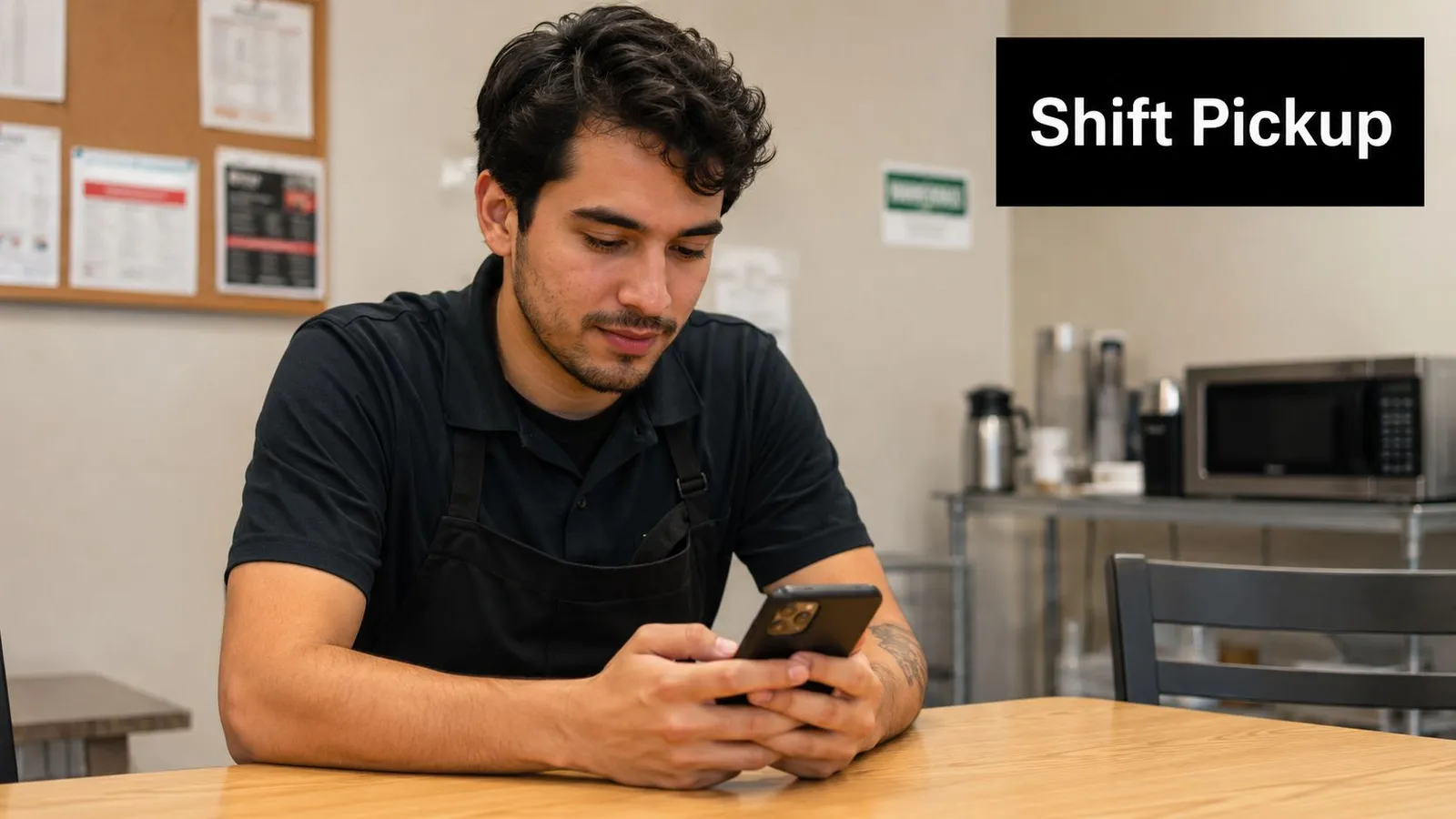
Make coverage faster without training the team to game you
This incentive fails when staff learn that waiting until the last minute earns extra money. It succeeds when you reserve it for real pain points, like same-day holes, unpopular shifts, or peak demand windows.
Use a few guardrails:
- Limit release access: Keep release approvals tighter on peak shifts and looser on lower-risk ones.
- Adjust incentive amounts weekly: If a certain shift fills fast without a bonus, stop paying extra for it.
- Recognize reliable helpers publicly: A “shift hero” board works because people like being known as dependable.
Blackhawk Network survey findings summarized by Shortlister show that 65% of employees prefer non-cash incentives over monetary rewards, 41% favor prepaid or gift cards as their top reward choice, and 44% now prefer digital prepaid and gift cards after the pandemic shift, according to Shortlister's roundup of employee rewards statistics. That matters here. A pickup reward doesn't always have to be payroll cash. For some teams, fast digital gift cards, priority scheduling, or first choice on future sections feel better and land faster.
I've seen managers overcomplicate this with too many exceptions. Don't. If the team can't explain the rule in one sentence, they won't trust it.
3. Tip Pool Bonuses and Transparent Tip Distribution Recognition
Tip incentives can build teamwork fast, or start fights even faster. The difference is transparency.
When staff can see how tip pools, tip-outs, and service charges are handled, the room gets quieter. People stop assuming someone else is getting favored treatment. If you use automated calculations, you also remove a big source of manager error at the end of a long night. That's one reason it helps to get clear on service charge versus tip rules in restaurants before tying any bonus to guest spend or pooled earnings.
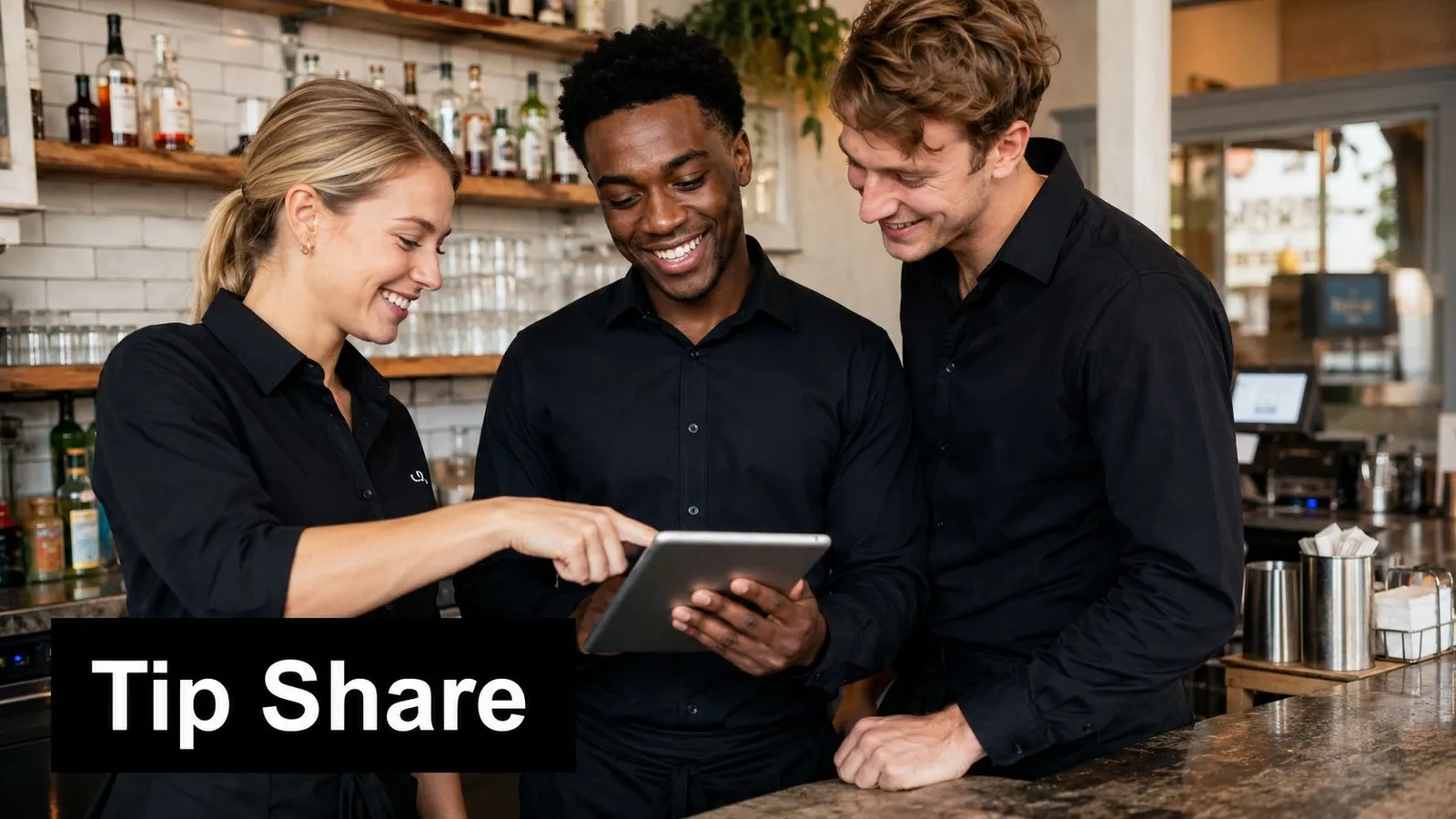
Use visibility to reinforce teamwork
A useful model is monthly recognition when a team clears a tip benchmark and does it consistently across comparable shifts. Don't compare a packed Saturday patio to a rainy Tuesday lunch. Break targets by shift type so people see the system as fair.
Points-based rewards fit especially well here. Employees earn points for behaviors you want more of, then redeem them for rewards they care about. Achievers describes points-based systems as a way to let employees choose personally meaningful rewards from a flexible marketplace in its guide to employee incentive program structures. That choice matters in restaurants, where one server may want cash value while another wants a certification course or a few extra hours off next month.
Clear tip math does more than reduce payroll headaches. It tells the team the house is keeping score fairly.
Good uses of tip-related incentives include recognizing support staff when pooled results improve, rewarding delivery teams for consistent service quality, and posting weekly trend summaries so everyone can see progress. Bad uses include mystery formulas, shifting benchmarks, and manager-only access to the numbers.
4. Attendance and Reliability Streaks with Escalating Rewards
You don't need a lecture on attendance. You need fewer no-shows and fewer “running 15 late” texts from the same names every week.
Reliability streaks work because they reward consistency before it becomes a crisis. Track consecutive shifts with no unexcused absence, no late arrival, and no early checkout unless it was approved. Then pay out escalating rewards at clear milestones. That can be cash, paid time off, or preferred scheduling.
Reward consistency, not perfection theater
The fastest way to make this program feel unfair is to punish approved PTO, medical leave, or life events that were communicated properly. Define “reliable” narrowly and communicate it in writing. Staff should know exactly what breaks a streak and what doesn't.
A few practical rules help:
- Start with reachable milestones: Four to eight weeks is easier to believe than a giant first hurdle.
- Post status weekly: People stay engaged when they know where they stand.
- Pair accountability with support: Chronic lateness sometimes points to transportation, childcare, or scheduling issues you can solve.
Nowsta's restaurant-focused incentive discussion points to an issue many operators already feel. It notes that 42% of restaurant workers value predictable scheduling over cash bonuses in hospitality settings, in Nowsta's article on employee incentive ideas. That's why reliability programs shouldn't exist in isolation. If someone is dependable, reward them with more schedule stability, not just a one-time payout.
The trade-off is simple. A streak system can motivate your best people, but if you use it as a blunt disciplinary tool, struggling employees will disengage instead of improving.
5. Cross-Training Skill Development Bonuses
Cross-training is one of the few incentives that helps on both good days and bad ones. On a good day, you have more flexibility. On a bad day, you don't melt down because one person called out.
Paying for new skills works especially well in restaurants because the benefit shows up immediately on the floor. A host who can run the POS during a rush, a bartender who can cover expo for a short window, or a line cook who can prep and close a second station gives you options that save labor and protect service.
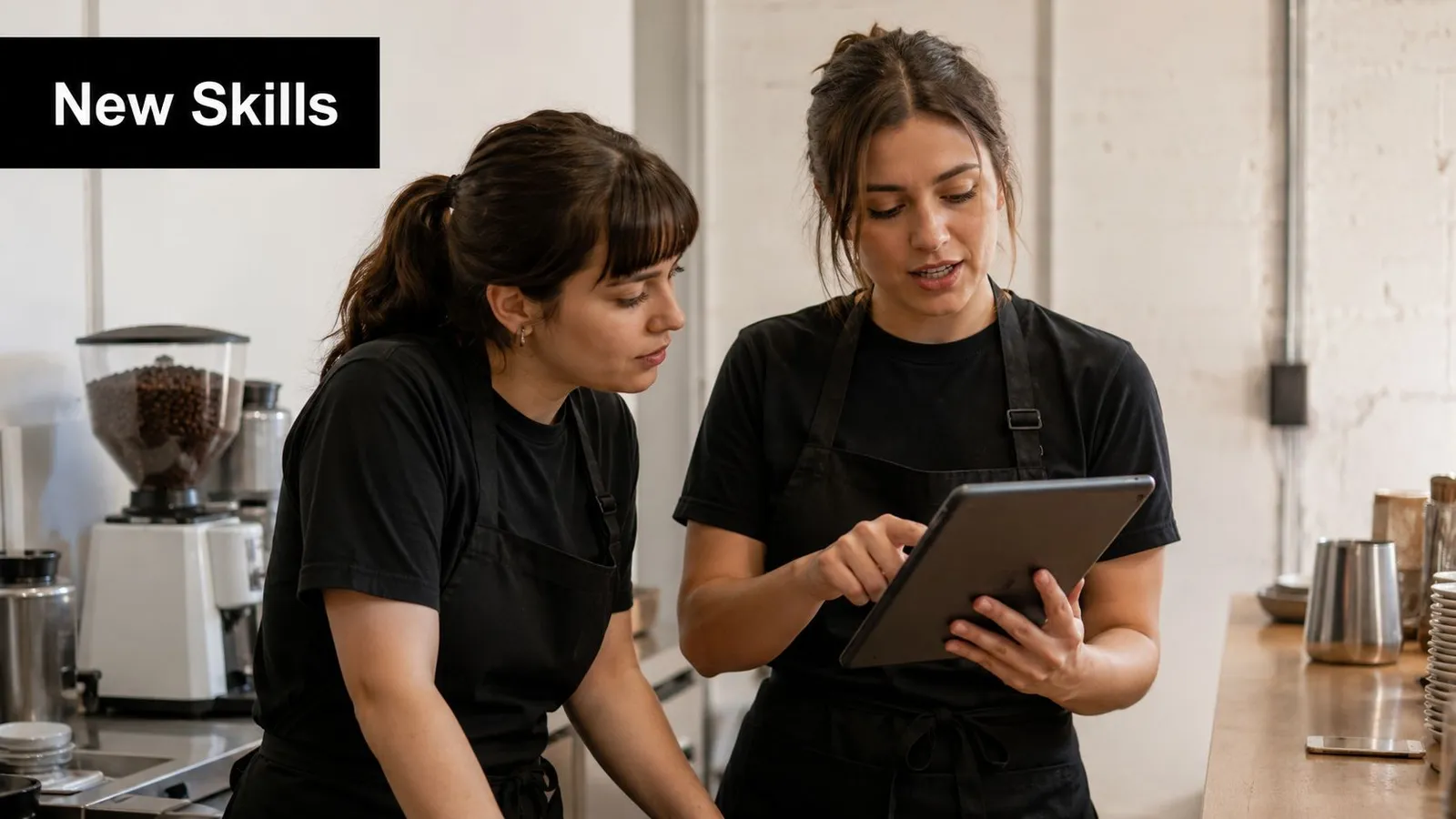
Build a skills matrix people can actually understand
Most operators make this harder than it needs to be. Put every key skill on one page. Show what each certification means, who can train it, and what pay bump or premium comes with it.
That can look like this in practice:
- Front-of-house crossover: Host learns takeout workflow and POS corrections.
- Bar support progression: Barback learns beer service, then wine, then opening procedures.
- Kitchen depth: Prep cook qualifies on fry station, then grill support, then closing checklist execution.
A skill bonus only works if the trained employee actually gets scheduled in ways that use the new skill.
A platform like AnchOps can help. Once someone is trained, scheduling should reflect it. If your “cross-trained” people never get deployed where they add value, the incentive becomes empty language.
There's another reason to widen your reward mix. Research summarized by CrewHu argues that generic cash bonus models often miss the growing value of experience-based and belonging-focused rewards, and it cites 35% higher engagement for those approaches in volatile industries while noting high restaurant turnover in CrewHu's piece on employee incentive ideas for retention. In restaurant terms, that means the reward for learning a new station doesn't always need to be just money. It can also be mentorship, a lead shift opportunity, or first shot at promotion-track training.
6. Team-Based Labor Efficiency Competitions and Leaderboards
Some incentives should stay individual. Labor efficiency usually works better as a team sport.
If you put one server or one line cook against everyone else on labor cost, you'll create resentment fast because they don't control the schedule. If you pit shift teams, dayparts, or locations against each other using the same score rules, people start sharing tricks that improve the operation.
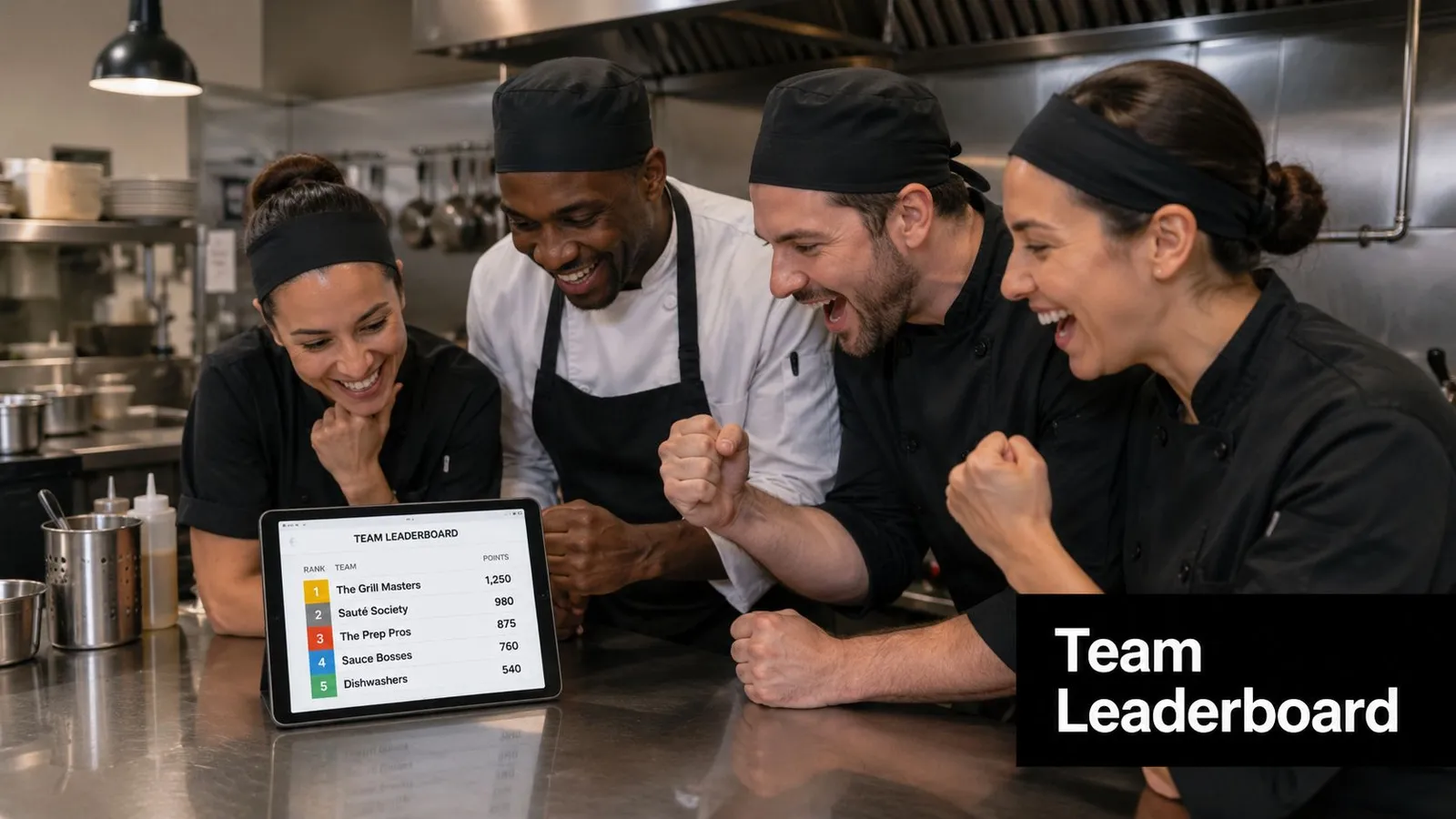
Keep the competition fair
Fairness is everything here. Exclude freak events from the scoring. A power outage, a bus breakdown, or a surprise catering issue can distort the numbers and kill trust in the leaderboard.
A strong setup usually includes:
- Comparable score groups: Dinner competes with dinner, not brunch.
- Visible rules: Everyone knows the measure and how often it resets.
- Team-centered prizes: Staff meals, group outings, or shared rewards fit better than winner-take-all cash.
The broader market is moving this direction too. Business Research Insights projects the global Rewards and Incentives Service Market at USD 6.52 billion in 2026 and USD 12.99 billion by 2035, with digital rewards holding 55% share, while the Social Employee Recognition Systems Market is estimated at US$ 16.65 billion in 2026 and growing through cloud-based deployment, according to Business Research Insights on rewards and recognition markets. For operators, the takeaway is practical. Digital, cloud-based tracking makes team competitions easier to run consistently, especially across multiple units.
The common mistake is rewarding the lowest labor percentage without checking guest experience. Teams should be able to win only if the shift stayed clean enough that you'd want to repeat it.
7. Predictable Scheduling Bonuses and Schedule Stability Rewards
A stable schedule is one of the most underrated incentives in restaurants. It doesn't look flashy, but it reduces stress, cuts callouts, and keeps good people from quitting because they can't organize the rest of their lives.
If you can build patterns two or more weeks ahead and keep them mostly intact, reward the employees who commit to them. That reward can be a monthly bonus, first pick of future requests, or more flexibility when they need time off later. AnchOps can help if you're trying to create a staff schedule from availability and sales patterns instead of rebuilding it from scratch every cycle.
Stability is a reward on its own
This is one of the best ideas for incentives for employees because it gives value without inflating every hour of labor. You're not paying people just to show up. You're paying for mutual commitment and reducing the operational chaos that comes from constant reshuffling.
A few guidelines matter:
- Protect the pattern: Don't advertise a stable schedule, then rewrite it every week.
- Give preference priority: Employees who commit to consistent patterns should feel that benefit.
- Allow reasonable flexibility: Life happens. One approved swap shouldn't erase months of reliability.
Some jobs can absorb unpredictable scheduling. Restaurants usually can't, because unstable scheduling creates downstream problems in transportation, childcare, fatigue, and morale. When staff know their rhythm, they show up better.
I've found this is one of the easiest wins for operators who say they can't afford incentives. Often, they already pay for instability through overtime, manager time, and avoidable turnover. A schedule stability reward redirects some of that cost toward a behavior that helps.
8. Customer Service and Quality Metrics Bonuses
Cost control matters. Guests don't come back because you hit labor. They come back because the experience was worth repeating.
That's why the strongest bonus plans pair efficiency with quality. You can tie rewards to review trends, complaint rates, remake frequency, mystery shop results, or other service markers you already track. In a restaurant with a POS and labor platform connected, this gets much easier because managers don't have to collect data by hand.
Balance speed with guest experience
The cleanest version is a stacked bonus. Team hits labor target, then qualifies for an additional quality kicker if service standards stayed strong. That structure prevents the classic mistake of rewarding labor cuts that hurt guest experience.
Use quality signals people can influence directly:
- Review and feedback trends: Look for patterns, not one loud guest.
- Remakes and voids: These can be useful proxies for execution problems.
- Complaint follow-up: Reward shifts that solve problems quickly and professionally.
Monetary incentives still have a place here when you need a short, sharp push. Tremendous describes Sales Performance Incentive Funds, or SPIFs, as short-term financial rewards designed to drive specific behaviors during defined periods in its guide to employee incentive programs and SPIFs. Restaurants can borrow the structure even if they aren't running a sales floor. For example, a two-week push around online review recovery, dessert attachment, or remake reduction can work well when the target is narrow and temporary.
Quality bonuses should never reward staff for pressuring guests into positive reviews. Reward the experience, not the ask.
9. Flexible Benefits and Time-Off Trading Programs
Not everyone wants the same reward, and that's where a lot of incentive plans break. One employee wants cash. Another wants an extra day off. Another cares more about tuition help, wellness support, or a development course.
Flexible redemption solves that problem. Instead of treating every bonus like payroll only, let employees convert earned rewards into options that fit their lives. This is one of the simplest ways to make ideas for incentives for employees feel personal without creating ten separate programs.
Give people options, not one generic prize
A practical setup is to create tiers. Basic rewards might include digital gift cards, shift preference, or extra paid hours off. Higher tiers might provide tuition help, wellness stipends, or a larger PTO bank.
Use a few basic rules:
- Survey preferences regularly: What people want changes.
- Set caps: Flexibility still needs budget control.
- Make redemption simple: If people have to chase forms, the program dies.
Agendrix notes that bonus programs are often structured as annual, quarterly, or project-specific awards tied to individual, team, or company-wide goals in its overview of employee incentive program bonus structures. That flexibility is useful here. A project-specific reward can be traded for time off. A quarterly reliability bonus can be taken as cash or converted to another benefit. Same earned value, different delivery.
This matters in hospitality because teams are mixed. Students, parents, career servers, kitchen veterans, and new hires don't all respond to the same thing. A reward choice system respects that without making managers negotiate one-off deals every week.
10. Career Pathing and Promotion Bonuses with Fast-Track Incentives
A lot of operators say they want to promote from within. Fewer can show a dishwasher, host, or line cook exactly how to get there.
That gap matters. If the team can't see the ladder, they assume there isn't one. A career path incentive fixes that by attaching rewards to visible milestones. Finish station training, get a bonus. Hit assistant lead criteria, get a bigger bonus. Earn promotion into a higher role, get a promotion payout plus a clear training plan for the next step.
Spell out what promotion-ready means
Promotion programs fail when the criteria are vague or political. They work when the standards are written down and managers use actual performance data, not gut feel, to decide who's ready.
Useful criteria often include:
- Attendance and reliability: Promotion candidates have to be dependable.
- Operational performance: Labor awareness, close quality, or prep accuracy matter.
- People skills: Can this person train others and stay calm under pressure?
Gallup reporting summarized by Shortlister found that recognition and reward practices make workers four times more likely to be engaged and five times more likely to see opportunities for growth within their company, as noted earlier. That second point is the heart of promotion incentives. If people can connect effort to advancement, they stay invested longer.
The practical version inside a restaurant is simple. Use AnchOps summaries, timecard consistency, labor awareness, and quality trends to identify people already acting like the next role. Then reward the transition so promotion feels like a meaningful step, not just extra responsibility dumped on the same paycheck.
10-Point Employee Incentives Comparison
| Program | Implementation Complexity 🔄 | Resource Requirements ⚡ | Expected Outcomes 📊 | Ideal Use Cases 💡 | Key Advantages ⭐ |
|---|---|---|---|---|---|
| Performance-Based Shift Bonuses Tied to Labor Targets | Low, AnchOps automates tracking; policy decisions required | Low, data automated; modest bonus pool | High ROI, commonly recovers 3–5% of labor overruns in 30 days | Mid-to-high volume restaurants, QSRs, multi-unit ops | Direct behavioral link to pay; improves scheduling accuracy |
| Shift Coverage Incentives & Release Buyout Programs | Medium, policy setup and pickup workflows | Medium, premium pay budget; notification integrations | Faster shift coverage; measurable improvement in 2–3 weeks | Operations with frequent late releases; retail & restaurants | Eliminates manual coordination; empowers employees |
| Tip Pool Bonuses & Transparent Tip Distribution | Low, AnchOps automates calculations; add policy layer | Low, reduced admin; small pooled bonuses | Builds trust and service consistency; benchmark tip rates 18–22% | Fine-dining, upscale casual, delivery-focused venues | Fair, transparent tip distribution; fewer disputes |
| Attendance & Reliability Streaks with Escalating Rewards | Medium, clear rules and streak definitions needed | Low–Medium, modest cash or PTO rewards | 30–40% reduction in no-shows/tardiness within ~60 days | High no-show environments; QSRs and multi-unit operators | Improves predictability; reduces emergency staffing |
| Cross-Training Skill Development Bonuses | Medium–High, training programs and tracking required | High, training costs, certification tracking & admin | Greater flexibility; typically captures 10–15% value via premiums | Busy locations needing role flexibility; high-volume sites | Builds skills, career paths; reduces single-point failures |
| Team-Based Labor Efficiency Competitions & Leaderboards | Medium, communication cadence and prize logistics | Low–Medium, prize budget plus analytics | High engagement; sustained behavior for 3–6 months before refresh | Multi-shift or multi-unit teams seeking culture change | Gamification drives sustained behavior; team accountability |
| Predictable Scheduling Bonuses & Schedule Stability Rewards | Low–Medium, policy and scheduling discipline | Medium, monthly bonuses and scheduling admin | 25–35% improvement in part-time tenure | Retail, coffee chains, part-time-heavy workforces | Improves retention and attendance; eases employee planning |
| Customer Service & Quality Metrics Bonuses | Medium, requires POS/review integration | Medium, data integration and bonus pool | Sustains satisfaction while improving labor 3–5% | Full-service restaurants; brands prioritizing CSAT/NPS | Balances efficiency with service quality; ties pay to outcomes |
| Flexible Benefits & Time-Off Trading Programs | Medium–High, payroll & benefits customization | High, admin overhead and redemption tracking | Increases incentive satisfaction 30–40% vs generic bonuses | Diverse workforces; retention-focused employers | Personalized value increases perceived rewards and retention |
| Career Pathing & Promotion Bonuses with Fast-Track Incentives | High, development programs and ongoing management | High, training budgets, promotion infrastructure | Very high long-term ROI, can cut turnover 40–50% | Large chains and operators investing in internal talent | Creates internal talent pipeline; reduces turnover and hiring costs |
How Do You Launch Your First Incentive?
Most operators don't need more ideas. They need one incentive they can launch next week without creating a second job for themselves.
That's the core advantage of tying incentives to restaurant KPIs instead of random perks. You already know where the pain is. Maybe it's uncovered shifts. Maybe it's chronic lateness. Maybe it's labor drifting high because nobody sees the target until payroll closes. Pick the problem that causes the most noise, then attach one reward to the behavior that fixes it.
Start narrow. If callouts are wrecking your weekends, build a shift coverage incentive first. If the issue is labor creep, use a shift-level labor bonus with clear rules and a weekly recap. If morale is low because the schedule changes constantly, reward staff who commit to stable patterns and protect those patterns once they're published.
Keep the rules simple enough that a supervisor can explain them in under a minute. What behavior earns the incentive, how it's tracked, when it pays out, and what disqualifies it. That's it. The more exceptions you add, the more your team will assume the system is political.
Automation matters. A platform like AnchOps is helpful because it puts labor targets, scheduling, shift coverage, team communication, time review, and tip calculations in the same operating rhythm. Managers don't have to run an incentive plan from sticky notes, screenshots, and text chains. They can track the result in the same place they already manage the shift.
Celebrate the first win quickly. If a team covers a brutal Friday hole without manager scrambling, say so. If a labor target gets hit for the first time in weeks, post it. The point isn't to create fake hype. It's to show people that the program is real, measurable, and worth caring about.
There's also a bigger leadership lesson here. Incentives work best when they remove friction for the team, not just pressure them to perform harder. A good program gives employees a fair shot to win and helps the business run better at the same time. That's why predictable scheduling, transparent tip handling, clear promotion paths, and skill-based pay tend to last longer than gimmicks.
If you work across industries or think about workforce strategy more broadly, there are useful parallels in these insights for Florida healthcare providers. Different setting, same truth. Teams respond when expectations are clear, operations are supported, and effort connects to something meaningful.
You don't need ten programs to build momentum. You need one that solves a real operational problem, gets tracked consistently, and pays out the way you said it would. Do that well, and the team starts believing you. Once that happens, incentives stop feeling like HR wallpaper and start acting like part of the operation.
If you want to put these ideas into practice without adding more admin work, AnchOps is built for exactly that. It helps restaurants forecast labor before the shift, auto-build schedules from availability and sales history, manage in-app shift releases and pickups, calculate tip pools automatically, review timecards in one weekly grid, and send mid-shift alerts when labor drifts over target. That makes it much easier to run incentive programs tied to real restaurant KPIs instead of tracking everything by hand.
Your back-of-house partner is ready
AnchOps handles scheduling, tip calculations, labor costs, and timecards — so you can focus on your restaurant, not your paperwork.