Coffee Food Truck Franchise: A 2026 Operator's Guide
Published on
By Tony Newcome — Founder of AnchOps · Owner, Pizza Harbour
This article was drafted with AI assistance and reviewed by Tony Newcome, a working restaurant operator.
A coffee food truck franchise can work, but treat it as a compact restaurant on wheels: expect franchise fees plus truck build-out costs up front, and judge any opportunity by unit economics, route access, and franchisor support — not by the morning line. Coffee's habitual demand and mobile format are advantages; operational discipline decides whether they become ROI.
For restaurant operators, the appeal is obvious. Coffee is habitual, the format is flexible, and the truck can go where demand already exists instead of waiting for guests to come inside. The trap is just as obvious. A truck can look simple from the sidewalk and still carry the same pressure you'd expect from a compact restaurant, plus route planning, local approvals, water capacity, and the need to sell hard enough every day to keep the wheels turning.
Table of Contents
- The Allure of the Mobile Cafe
- The Financial Blueprint Costs Fees and ROI
- Franchise vs Independent Choosing Your Path
- Franchise strengths and constraints
- Independent strengths and constraints
- A practical way to choose
- The Daily Grind Operations and Logistics
- Staffing and demand have to match the truck
- How to Evaluate a Franchise Opportunity
- Start with the documents and then pressure-test the claims
- Ask the questions that matter
- Is a Mobile Coffee Franchise Right for You
The Allure of the Mobile Cafe
A good coffee truck line does something that gets operators' attention fast. It tells you demand is already there, the menu is narrow enough to execute quickly, and the guest is willing to stand outside for a drink they trust. That combination looks attractive compared with the overhead of a brick-and-mortar café, especially when you're trying to expand without signing another long lease.
The franchise version sharpens that appeal because you're buying more than a wrapped vehicle. You're buying a system that already has a name, a process, and a playbook for getting cups out the window without reinventing every decision yourself. That's why the best franchise systems feel less like a truck and more like a retail store on wheels, with a tighter footprint and a more mobile customer base.
Practical rule: If the business story starts and ends with “people love coffee,” you're hearing the easy part. The hard part is making the route, labor, water, and compliance work on the slow days too.
The market backdrop helps explain why so many operators are looking at this format. One industry estimate values the mobile coffee truck segment at $1.16 billion and projects 6.4% growth through 2030 in that space, while the broader mobile food truck market that includes coffee vendors moved from $2.11 billion in 2024 to $2.49 billion in 2025 (Franchise Business Review). That growth doesn't remove the operational risk, but it does show why franchisors keep packaging coffee trucks as scalable mobile businesses rather than casual carts.
What Does a Coffee Food Truck Franchise Cost?
You can love the concept and still lose money on the wrong math. A coffee food truck franchise only works if the startup spend, royalty structure, labor, and daily sales all line up with the way the truck earns, not the way a brochure describes it.
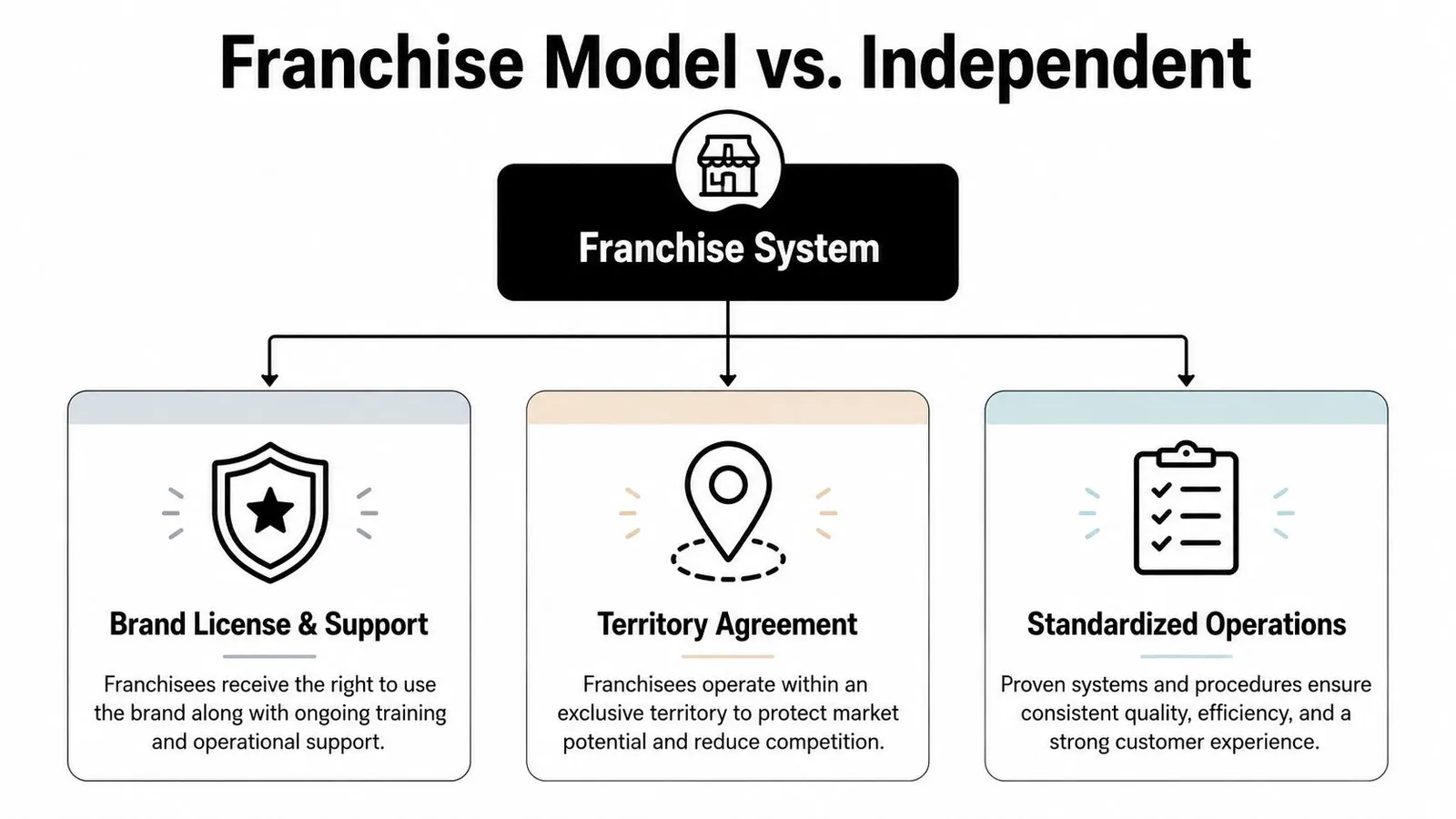
The first question is what you are really buying. Franchise systems usually bundle brand licensing, operational standards, territory rules, training, sourcing help, and the operating playbook into one package. The appeal is straightforward. You get a name customers can recognize, plus a process for ordering, setup, and service that reduces guesswork in the first months. The trade-off is also straightforward. Standardization can limit menu flexibility, pricing moves, and where you park when a market shifts.
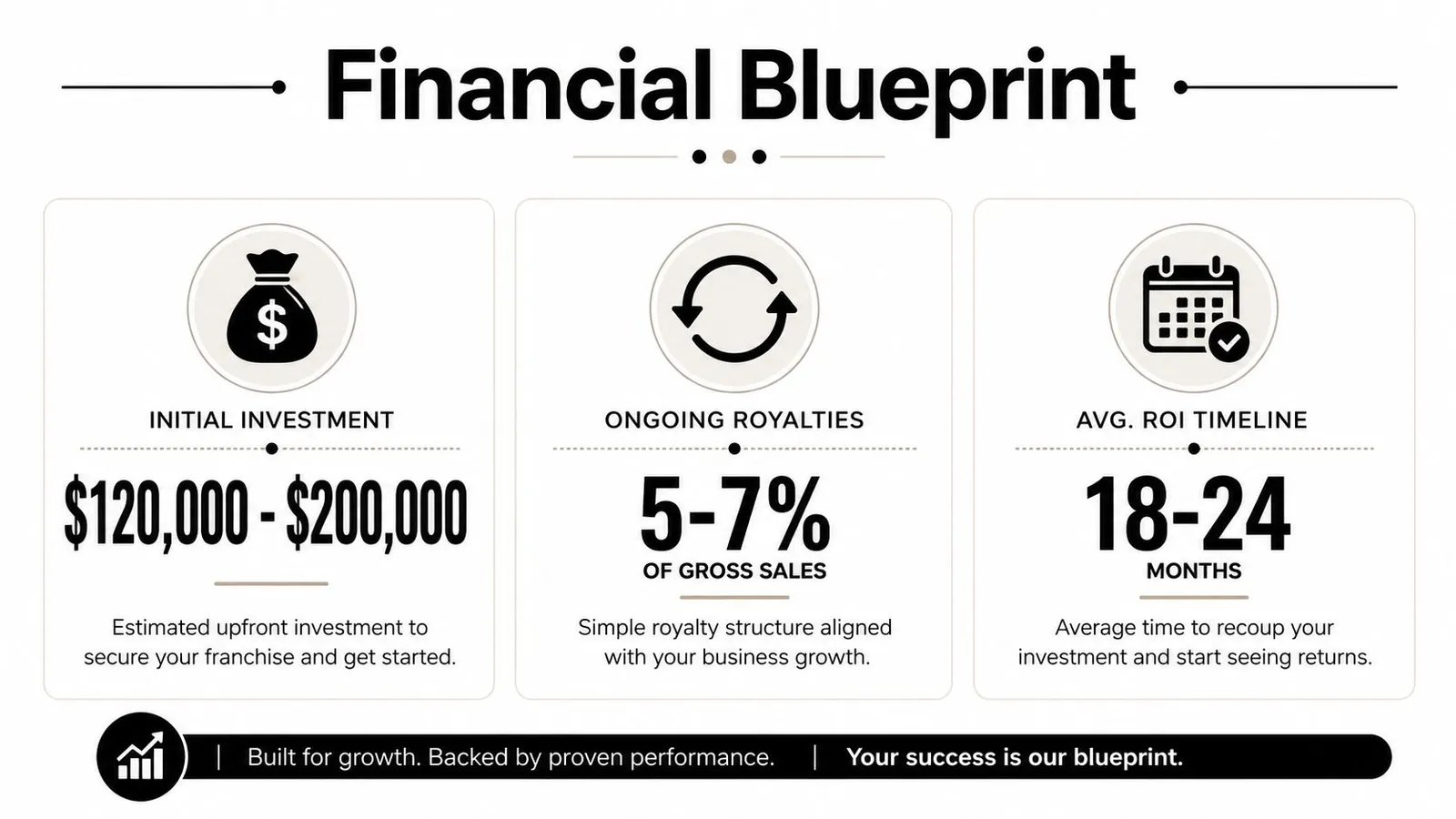
The budget side deserves the same discipline. Franchise Business Review's material on mobile coffee trucks points to a 2024/2025 total initial investment of $201,620 to $259,625, including a $15,000 franchise fee and a $171,950 vehicle requirement (Franchise Business Review). That puts this model in the serious-capital category. It is not a low-cost cart, and it should never be underwritten like one.
Ongoing fees matter just as much as the opening check. Travelin' Tom's Coffee reports royalties of $3,000 in years 1–2, $4,000 in years 3–6, and $5,000 in years 7–10 (Own a Coffee Truck). If you are comparing systems, those obligations belong beside your revenue forecast, your debt service, and your reserve for repairs, not buried below the headline investment number. For a broader budgeting check, Franchise Foundry's cost guide is useful when you want to see what startup costs are typically included and what tends to get left out.
Operator takeaway: A franchise fee by itself does not tell you much. The test that matters is whether the system helps you produce enough gross profit after vehicle, compliance, labor, and consumables to cover the monthly obligations.
Revenue potential can look strong in the right route mix, but only if the route mix is real. Toast says coffee trucks can generate net profit margins of 55% or higher, notes event-based catering cases with 82% margins on about $11,000 in revenue with less than $2,000 in spending, and says many coffee trucks average $6,000 to $9,000 per month in revenue, or about $72,000 to $132,000 annually (Toast). Those figures help you understand the ceiling. They do not guarantee that your first month, or your slow season, will get anywhere close to it.
That is why the labor model has to be part of the first pass. A mobile coffee operation can look profitable on paper and still bleed margin if you staff too heavily, overpay for help, or run inefficient shifts. A quick review with an internal labor cost calculator helps you pressure-test those assumptions before the truck is on the road, especially when you are trying to align service windows, prep time, and payroll with actual demand.
The hidden costs usually show up outside the franchise packet. Multi-jurisdiction permits, local health rules, parking access, commissary requirements, fuel, maintenance, insurance, and replacements for wear items can all chip away at the margin you thought you had. If you operate across different cities or counties, the compliance load gets heavier fast, and every extra stop adds another set of rules, fees, or inspections to manage. That is the part brochure math often skips.
A franchise can still be the right move if the system gives you enough volume, discipline, and support to keep the truck busy and the numbers honest. If it does not, you are carrying a branded vehicle with branded obligations, and the sales targets still have to be met one cup at a time.
Franchise vs Independent Choosing Your Path
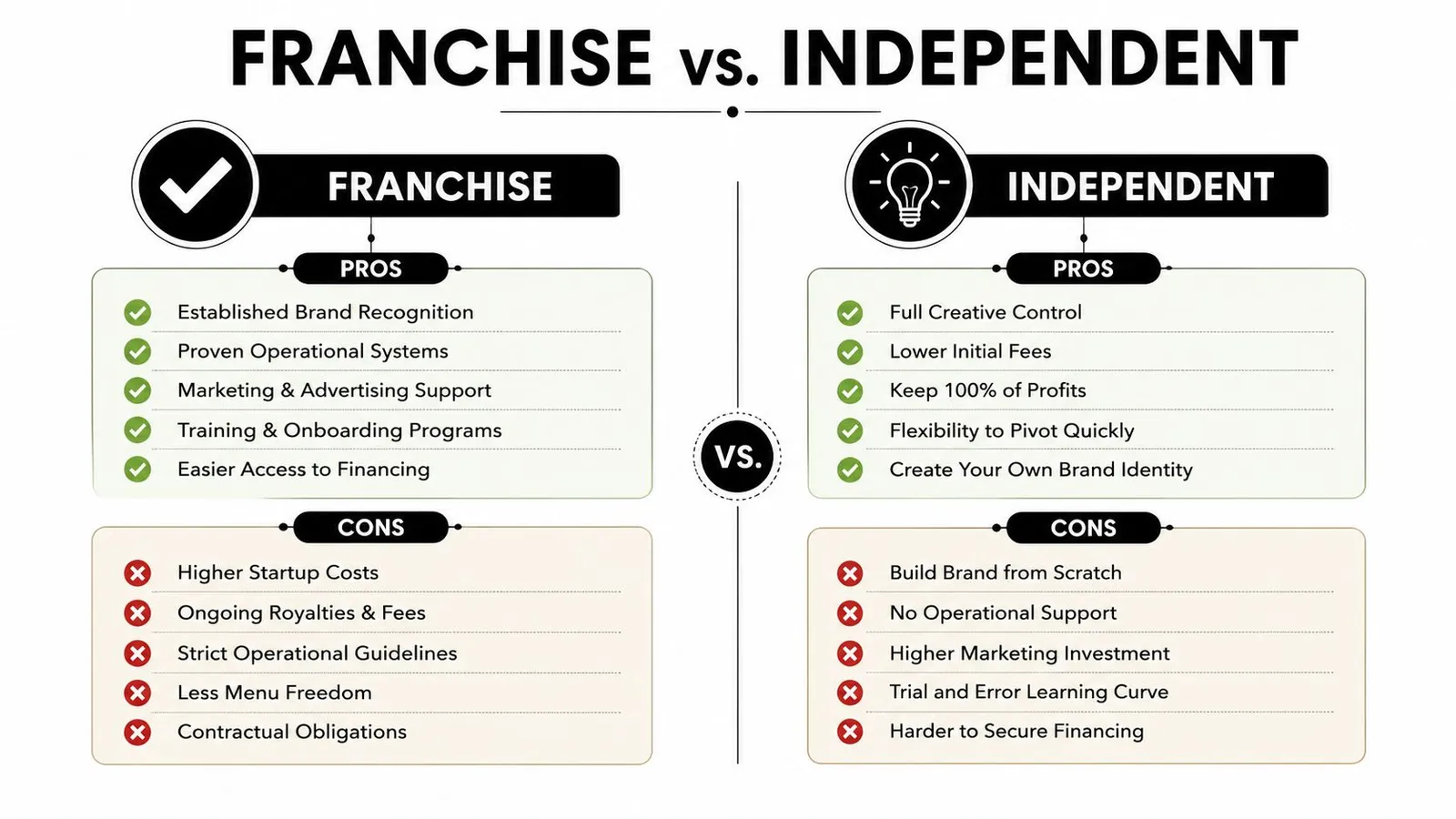
The right path depends on what you want to buy. If you want speed, structure, and a recognized name, a franchise can shorten the learning curve. If you want creative control and fewer rulebooks, an independent truck gives you more room to build your own identity, but it also makes you responsible for every mistake and every system.
The market structure shows why this decision still matters. Independent operators control 85.60% of the U.S. food truck market in 2025, while franchise concepts are projected to grow at a 7.86% CAGR (Mordor Intelligence). That split tells me the category still runs on owner energy, but branded systems are gaining ground where operators want a more repeatable model.
Franchise strengths and constraints
A franchise is the cleaner fit if you value process discipline. You get a playbook, support structure, and buying power that can reduce some of the trial and error. You also get a tighter operating lane, and for some operators that is exactly the point.
The trade-offs are real. You may give up menu flexibility, territorial freedom, or the ability to pivot fast when a local market changes. If your strength is invention, a franchise can feel boxed in. If your strength is execution, it can feel like a head start.
Independent strengths and constraints
An independent truck gives you room to test a concept without asking permission for every tweak. You can chase a niche, build a brand voice from scratch, and move faster on menu changes if your customer base responds. That freedom is powerful, especially for experienced operators who already know how to cost a menu and manage a crew.
But the independent route makes every support gap yours to solve. Branding, procedures, vendor relationships, location strategy, and troubleshooting all land on your desk. If you want the business to be simple, it won't be. It just gives you more control over where the complexity comes from.
A practical way to choose
Use your own operating style as the filter. If you're strongest at systems, scheduling, and consistency, the franchise model will probably reward you. If you're strongest at concept development and local brand-building, independence may fit better.
A quick decision checklist helps:
- Need for structure: If you want rules and training, lean franchise. If you want autonomy, lean independent.
- Tolerance for risk: If you want a more guided launch, franchise support can help. If you're comfortable building from scratch, independence gives you more control.
- Brand expectations: If you need recognition on day one, a franchise starts ahead. If you can spend time earning awareness, you can build your own name.
The Daily Grind Operations and Logistics
The truck is only the visible part of the operation. Behind the window, the actual business involves permits, route selection, service speed, inventory discipline, and crew management. A coffee unit can look efficient in the morning rush and still lose money if the operator ignores where the truck can legally park, how water gets handled, or whether the schedule matches the daypart.
Start with compliance, because mobile coffee is rarely governed by one set of rules. Independent guidance for coffee trucks emphasizes checking with councils, projecting sales, and building a business plan, while franchise materials often move quickly to branding and training without explaining how a unit handles location-by-location approvals. A practical primer on food truck licensing and permits is worth reading before you commit to a route or a city, because zoning and local approval can change the economics of a site very quickly.
Practical rule: The best route on paper is worthless if you can't legally return to it next month.
The physical setup matters too. Commercial guidance commonly specifies a 30 to 50 gallon freshwater tank, and the gray-water tank must be about 15% larger because wastewater foams and expands (YouTube guidance). That detail sounds minor until the truck is mid-service and you're trying to avoid a shutdown because water management wasn't designed around actual throughput.
Staffing and demand have to match the truck
The labor question is where many mobile concepts get optimistic. One operator guide says a single-barista coffee truck needs 100+ cups/day on weekdays and 150+ on weekends to be viable (FLTR Magazine). That's the kind of math franchise sales decks often skip, because it forces the buyer to think about daypart demand instead of brand appeal.
If you're planning a route, think in terms of service windows and queue behavior. A truck that crushes the morning commute may be weak by late afternoon. A catering calendar can balance that, but only if the operator has enough prep discipline and crew coverage to handle event spikes without burning out the team.
Useful controls to put in place:
- Route discipline: Stick to locations that justify the water, labor, and fuel consumed to get there.
- Inventory timing: Load the truck for the daypart, not for hope.
- Crew roles: Assign one person to speed, one to quality, and one to register flow when volume climbs.
- Cost tracking: Watch consumables and payroll together, because one can hide the damage in the other.
For planning labor around those moving parts, the labor planning guide is a useful reference point if you want to see how better scheduling thinking supports mobile service without overcommitting hours.
After the first rush, the truck still has to finish the day cleanly. That means waste disposal, count checks, and a reset that lets the next service start on time. The operators who win here usually aren't the ones with the flashiest truck. They're the ones who treat the back-of-house like a moving system that has to be reset every day, without shortcuts.
How Do You Evaluate a Franchise Opportunity?
A franchise pitch can sound polished even when the underlying system is weak. The evaluation process should focus on evidence, not energy. If you can't verify the support structure, the economics, and the local operating constraints, the truck is just an expensive asset with a logo.
Start with the documents and then pressure-test the claims
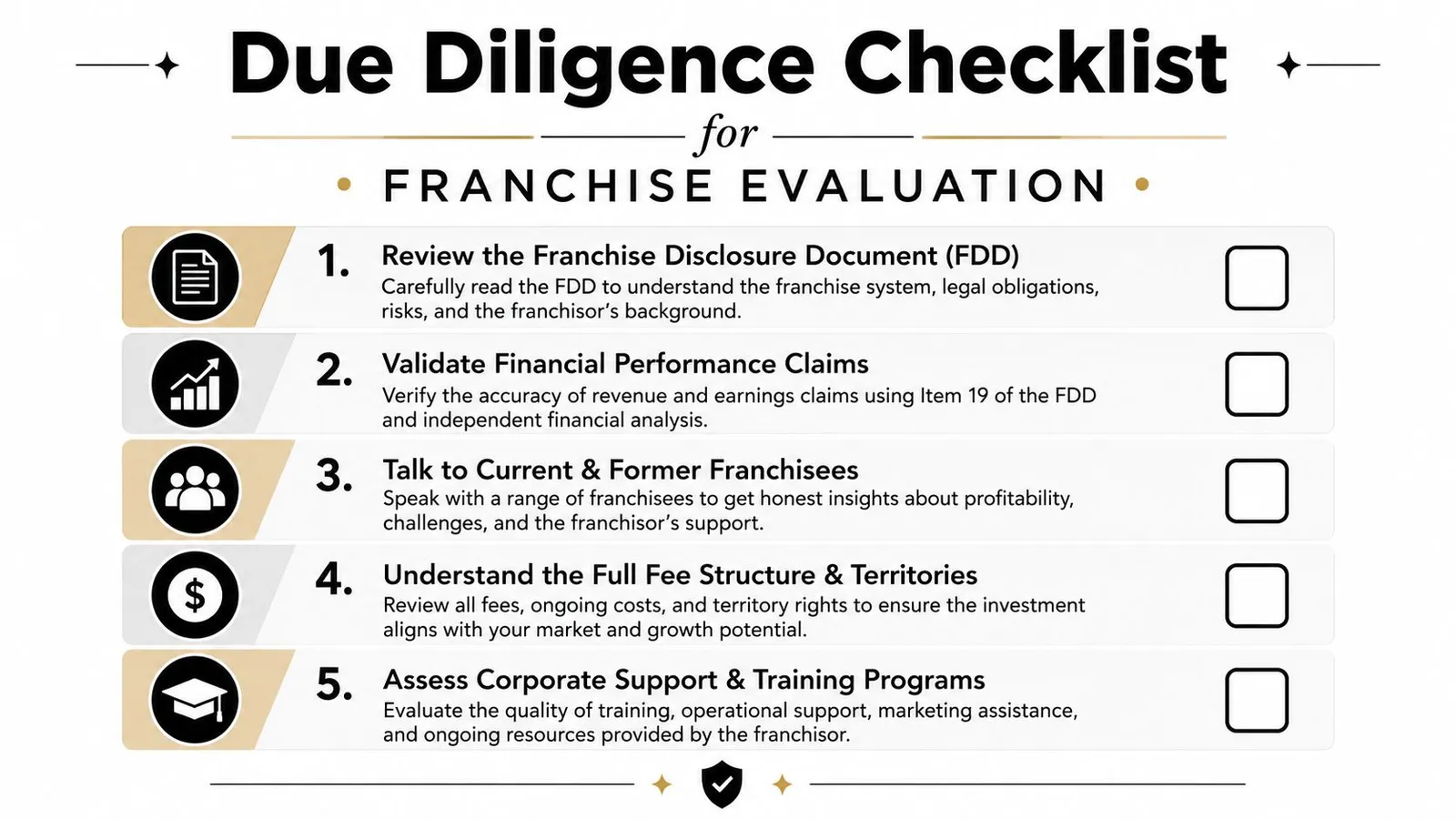
The Franchise Disclosure Document should answer basic questions before you ever get excited about the wrap or menu. Look closely at fees, territory rules, supplier requirements, training commitments, and any restrictions that could affect how you operate across different cities or counties. Then compare those claims with what the franchisor says about support and what franchisees experience in practice.
A good place to organize your review is the operating side of the business, especially food safety and setup requirements. The food certification and license guide helps frame the broader compliance mindset you need when evaluating whether a franchise understands real-world operator obligations.
Ask the questions that matter
The best questions are the ones that get past the sales script. Ask how the franchisor handles route approval, what training looks like after opening, how often systems are updated, and what happens when local rules change. Then ask current and former franchisees what works on the street, not what sounded good during the discovery day.
Useful filter: If support is always described in broad terms but never in operating terms, keep digging.
A simple due diligence checklist can keep the conversation grounded:
- Review the FDD carefully: Check the fee structure, restrictions, and termination terms.
- Validate revenue assumptions: Compare sales claims to what existing owners can show.
- Talk to franchisees directly: Ask about training, support, and daily friction points.
- Confirm territory and route rules: Make sure you know how locations are approved or limited.
- Test the support model: Find out who helps when permits, equipment, or staffing break down.
The strongest systems don't just promise onboarding. They show how they help the operator stay profitable after the launch window closes. If the brand can't explain how it supports locations through seasonality, site changes, or staffing gaps, the burden shifts back to you fast.
Is a Mobile Coffee Franchise Right for You?
This model rewards operators who respect structure and don't get dazzled by the truck wrap. If you want brand recognition, a repeatable system, and a business that can move where guests already are, a coffee food truck franchise can make sense. If you want a looser operating style, broad menu freedom, or a softer learning curve, you may feel boxed in before the first service window ends.
Ask yourself three blunt questions. Can you manage a business where compliance changes by location? Can you run tight labor and inventory control on days when the traffic underperforms? Can you live with a model where the economics depend on discipline, not just demand?
If the answer is yes, keep going and verify every promise in writing. If the answer is no, that's useful too, because the truck won't fix a weak operating model.
AnchOps helps restaurant operators keep labor in line before the shift starts and while service is happening, which matters in a mobile concept where every extra hour hits margin fast. If you're evaluating a coffee food truck franchise and want better control over scheduling, labor visibility, and shift-level decisions, visit AnchOps and see how it fits the way you run operations.
Your back-of-house partner is ready
AnchOps handles scheduling, tip calculations, labor costs, and timecards — so you can focus on your restaurant, not your paperwork.